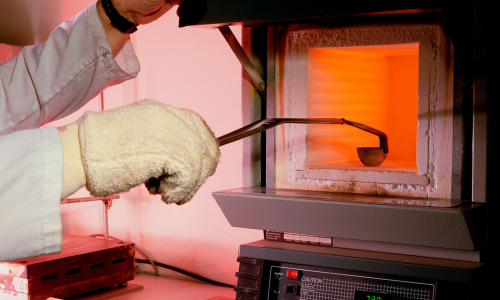
High-performance muffle furnaces are one of the essential pieces of equipment in modern laboratories and industrial facilities that require precision, reliability, and contamination-free heating. These furnaces are used for ash determination, calcination, sintering, and heat treatment, among other things, and they can support temperatures ranging from 1000°C to 1800°C+, thus being able to deliver a wide range of consistent results in different applications.
If you are a research lab, pharmaceutical manufacturer, ceramics producer, or materials science facility, then the right choice of a high-temperature laboratory furnace is a direct factor that influences the accuracy, productivity, safety, and operating cost of your lab in the long run.
This manual describes the operation of a high-performance muffle furnace, the features that are really important, the way to choose the right model, and how to assess the cost, power consumption, and size of a muffle furnace so that you can make a decision that is both confident and informed.
A muffle furnace oven is a high-temperature heating equipment that is specifically made in a way that the heating elements are isolated from the chamber. This “muffle” design keeps the direct flame or combustion gases from contacting the sample, thus the sample is heated without any contamination.
High-performance models go beyond basic heating by offering:
A high-performance muffle furnace also known as box furnace, or an industrial heat treatment machine, or as a vacuum muffle furnace used in laboratory for a certain sensitive operations.
The first essential feature of any high-performance muffle furnace is temperature capability and stability. Different temperature classes could be represented by such high-performance laboratory furnaces, for instance:
Equally, if not more, stability is as significant as the highest temperature. A very reliable high-temperature laboratory furnace is able to keep the set points without drift, even during long soak cycles.
Uniform heating of the chamber (usually ±2–5 °C) allows:
Advanced thermocouple installation and PID control systems are the key elements that achieve this level of precision.
High heat-up rates are one of the most significant factors that will make a high-performance furnace attractive to be used in an industrial environment. We are talking about:
All of this is a great batch laboratory use and heavy industrial process workflows.
Today’s muffle furnaces have PID controllers with multi-step profiles that are programmable, thus enabling:
For a research and production environment, the use of programmable controllers is much more reliable than that of basic digital controllers.
Most high-temperature furnaces are equipped with:
FeCrAl (Iron-Chromium-Aluminum) elements that ensure long-life and high-temperature resistance
Nichrome elements that are used for medium temperature ranges
The choice of elements influences the duration of the furnace, the energy efficiency, and how often it needs to be serviced.
Only high-purity ceramic fiber or alumina can be used for the production of insulating materials of the muffle furnace, thereby greatly lessening the heat that escapes and, thus, providing low muffle furnace power consumptions and costs. On top of that, excellent insulation also contributes to the external surface safety of the muffle furnace.
Among the major construction features are:
An efficiently designed muffle furnace not only guarantees the long life of the device, but also provides safety and gives the user a feeling of security.
Muffle furnaces that perform well at a high level, at least include the following safety features:
For tightly regulated market industries, muffle furnaces meeting GMP requirements constitute a great aid in the pharmaceutical and food sectors in that they facilitate smooth audits and validated processes.
The use of laboratory box furnaces is quite an easy task. Such equipment are ideal for:
They prioritize precision, compact muffle furnace size, and ease of use.
On the other hand, industrial furnaces:
They need for better-insulated materials, more reinforced designs, and upgraded cooling systems.
Among the different factors that can be used to determine whether a furnace is the right choice for a user are:
Applications Across Industries
Almost all the manufacturers provide customized:
The use of vacuum muffle furnace or the inert gas (argon or nitrogen) is the best choice for materials that need to be protected from oxygen and for advanced research.
It is not just a heating device but in effect a high-performance muffle furnace is a powerful tool which can affect the accuracy, protection and productivity and by extension, the resultant low operating cost in the long run. You will know the construction of the device, temperature range, power consumption, and needs of the application, so that you will be able to come up with the solution that will be both stable and reliable over the time.
In case you are considering other alternatives or furnace muffle sellers to consider, it may be a good idea to have a technical consultation so as to know that your laboratory or industrial needs are fulfilled according to the furnace.
Need help selecting in the right high-temperature furnace?
Refrigerant gases that are used in water chillers include Ammonia (R-717), R-134a, R-410A and R-407C. As the modern chillers stabilize, there is a significant use of low-GWI refrigerant such as R-513A, R-1234ze, and R-1233zd in an effort to comply with environmental laws. This decision is based on the size of the system, application and the safety requirements.
Ammonia is employed in industrial chillers due to its high cooling efficiency, good heat transfer capabilities as well as zero global warming capabilities. It suits well on large capacity systems like cold storage and process cooling. Nevertheless, it is toxic and thus needs to be handled by trained people and with high standards of safety.
The contemporary eco-friendly chillers incorporate low-GWP refrigerants including R-513A, R-1234ze and R-1233zd. These gases offer efficient cooling and offer a great deal of cooling to the environment. These are typically utilized in new commercial and centrifugal chiller systems.
No, absorption (chillers) do not involve the use of traditional refrigerant gases. Rather, water is used as the refrigerant and lithium bromide or ammonia is applied as the absorbent. These chillers require heat energy rather than compressors thus suitable when the source of heat is waste or steam in nature.


Connect with us for your business enquiries. Generally, we respond within a day.