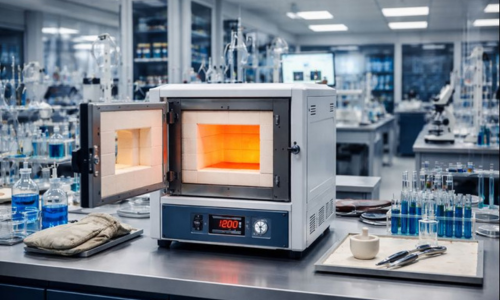
Heat is not only a utility in a research setting, it is a controlled scientific parameter. Since the initial stage of material development and chemical analysis, to more complex stages of thermal processing, a laboratory furnace plays a crucial role in determining the accuracy, repetition, and validity of the research results.
Unlike traditional heating devices, a Lab Furnace is manufactured to provide accurate regulation of temperature, even heating, and consistent functioning throughout long-term experimental periods. Regardless of whether it’s a furnace in a chemistry lab or a materials research institute, the data integrity and the success of a long-term research depends exactly on the choice of the furnace solution.
A furnace that is used in a laboratory has much more to do than just get hot. It should be able to sustain those temperatures all the time, preserve samples against contamination and enable the researcher to replicate results with confidence.
In a modern furnace for laboratory use, researchers expect:
Such requirements make lab furnaces to be a basic instrument in a scientific research not just a simple heating device.
The conditions of the research laboratories are very different compared with those of production. Rapidity, adaptability and control are considered more important than speed or quantity.
Common challenges faced by laboratories include:
A well manufactured industrial Laboratory Furnace overcomes these issues through the incorporation of high-end control systems and the use of research-grade construction.
Different furnace designs are needed with various research objectives. These differences assist laboratories in selecting equipment that can actually benefit them.
Muffle furnaces are the type of furnaces that are the most popular in the laboratory as they are versatile and simple. The design of their insulated chamber separates the samples of heating factors, and thus, provides a clean and stable heating environment.
They are widely used for:
In the case of laboratories that assess the costs with performance, the understanding of Laboratory Muffle Furnace Price assists in having a balance between the budget and the research requirements.
Tube furnaces are good when the experiment may need the exact control of gases and even distribution of heat. Their shape is cylindrical which enables gases to circulate uniformly around samples and so it is applicable in sensitive reactions.
Applications include:
A high temperature laboratory furnace in tube form provides precision and flexibility when a high thermal stability is needed.
Vacuum furnaces are necessary in a study of materials that are prone to oxygen or contamination. They permit clean thermal processing of high temperatures by working under or in an inert gas atmosphere or under vacuum.
They are commonly used in:
A high temperature lab furnace with vacuum capability make sure material integrity throughout the heating cycle.
The Bottom-loading furnaces ease the process of loading and unloading heavy or delicate samples, risk of damage may occur during the loading and unloading. They come in handy especially in repetitive thermal cycles or pilot-scale research.
These kinds of furnaces are frequently selected because of the following reasons:
The design features of a furnace are critical towards its performance in laboratory environments, which affects the reliability of the experiment directly.
Enhanced PID controllers and optimized heating zones guarantee the stabilization of temperatures as well as uniformity of temperatures in the entire chamber. This accuracy (typically +-1degC) is important to reliable research findings.
Such control is a difference between a research-grade furnace for laboratory applications and uncomplicated heating equipment.
A lot of research procedures need heating of the air beyond the ambient. The controlled atmosphere options enable the laboratories to use inert, reducing, or oxidizing gases, or even in vacuum conditions.
These features support:
This type of control is particularly significant in an application of a furnace in chemistry lab.
Laboratory furnaces are constructed with several safety measures such as:
Such protective measures force these experiments to run the same in long and high-temperature tests.
Advance furnaces enable researchers to provide a fine structure of heating profiles with a known and controlled ramp-rate and dwell-time. They are useful in data documentation, validation, and repeatability in research processes with the help of data logging and monitoring capabilities.
There are wide range of applications of laboratory furnace:
In both scenarios, the output of a high temperature furnace has a direct influence on the accuracy and efficiency of the research.
A laboratory furnace is function as a part of a larger research system. Combination with glove boxes, environmental chambers, incubators and cleanroom equipment, will provide a more streamlined workflow and control of the experiment.
Examples include:
Integration of furnace and glove box for air sensitive materials
Furnace and humidity chamber combinations for stability testing
Use of furnace in clean rooms as a means of contamination control
This kind of integration increases productivity and reliability of research.
Choosing the Right Laboratory Furnace for Your Needs
Selecting the appropriate furnace cannot be a simple process of comparing the specifications or looking at the laboratory furnace price alone. Key considerations include:
Understanding of the lab furnace price concerning durability and performance assists the laboratories to make effective and economical choices.
A reliable industrial laboratory furnace should be able to provide reliable results over the years operations. The quality of heating elements, durability of insulation, supply of spares and technical support are some of the factors that play a critical role in reducing downtime.
Dependable services and professional advice are a guarantee of continuous research process and value in the long term.
Solutions to laboratory furnace are not only concerned with high temperatures, but they are concerned with precision, consistency, and confidence in research. Through the appropriate furnace design and capabilities, labs may facilitate the complicated experiments, enhance reproducibility, and innovate in the fields of science.
Simple muffle furnaces to sophisticated high temperature laboratory furnaces, effective solutions provide the capability of designing researchers to concentrate on finding, rather than on equipment shortcomings.
The right water chiller is based on the load of heat and the way it will be used. Small chillers (such as a lab or an aquarium) might only require 1-2 ton chillers, medium sized chillers (offices or minimal factories) might require 5 ton chillers, and big factory plants or in commercial facilities may require 15 ton or more capacity chillers. Correct capacity selection provides the efficiency of energy and long life of equipment.


Connect with us for your business enquiries. Generally, we respond within a day.