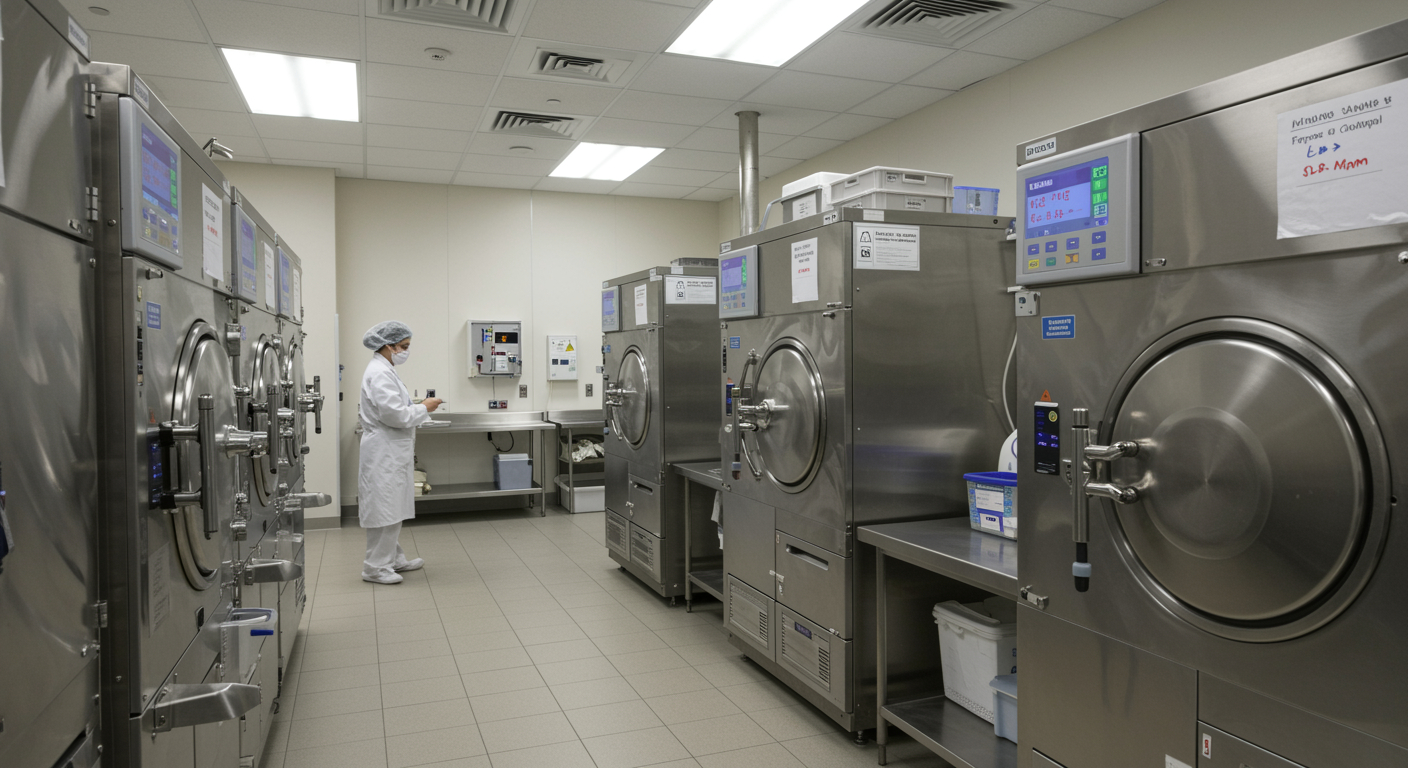
Areas like hospitals, research facilities and pharmaceutical spaces need one important product for functioning- Autoclave machines. These sensitive places have many machines and tools that rely on consistent sterilisation. When deciding on buying more than one autoclave, you must only select the most trusted Autoclave Machine Manufacturers in India manufacturer that offer the best autoclave price along with quality and durability.
Let us walk you through the complete process of autoclaves procurement so that by the end of this blog, you are ready with a decision and can make an informed choice.
Autoclave is a machine that is used to sterilise equipment in hospitals and related facilities. The machine uses high pressure and temperature to remove viruses, bacteria, etc. Some of the areas where these machines are used are research facilities, healthcare centres, pharmaceutical companies and more.
Different types of autoclaves are:
Let us look at some of the factors that should never be ignored when buying critical machines like autoclaves.
Before you buy anything, start with an assessment.
vertical-autoclave.html
Know answers to these questions-
If your work space handles large loads regularly, you should go for industrial autoclaves. For limited spaces, vertical autoclaves are a good choice.
|
Requirement |
Notes |
|
Daily load volume |
Estimate sterilization cycles per day |
|
Types of materials |
Solid instruments vs liquids |
|
Space available |
Floor space and utility access |
|
Power requirements |
Electrical capacity in your facility |
|
Compliance standards |
ISO, FDA, WHO requirements |
This initial step shapes the rest of your planning.
When looking for autoclaves, assess your industrial requirement first. Here are the two types of autoclaves.
The price of a credit card depends on your needs. Autoclave price depends on the following:
Buying in bulk often gives you the leverage to bargain for better pricing and additional services like installation and warranties. You just need to work with the finance and procurement departments to set a budget for the bulk purchase.
When it comes to safety in places like hospitals and research centres, quality should never be compromised.
Always Go For:
Request product documentation and test reports. The goal is to ensure that each unit you buy meets the required standards for your application, especially important in pharmaceutical production or clinical settings.
Bulk procurement should always have consumables to keep the entire sterilization process run smoothly.
When you include these items in your order, you get respite from purchasing them later.
It is important to get your supplier’s and manufacturers’ support.
What to Check?
Good suppliers will help you with:
Supplying bulk orders takes time. Therefore, you should plan things in advance.
When your autoclaves get delivered, properly training your staff will ensure a safe and long life for your machine.
Train the staff about:
|
Parameter |
Specification / Details |
|
Sterilization Method |
Moist heat sterilization using saturated steam under pressure |
|
Operating Temperature |
121 °C – 134 °C |
|
Operating Pressure |
15–30 psi (1.0–2.1 kg/cm²) |
|
Sterilization Time |
3–60 minutes (depending on load & cycle) |
|
Chamber Material |
Stainless Steel SS 316 / SS 304 |
|
Chamber Design |
Cylindrical or Rectangular |
|
Chamber Capacity |
50 L – 500 L (model-dependent / customizable) |
|
Door Type |
Manual, Semi-Automatic, or Fully Automatic with interlock |
|
Air Removal |
Gravity displacement / Pre-vacuum system for porous loads |
|
Steam Quality |
Dry saturated steam (≥97% dryness fraction) |
|
Control System |
Microprocessor / PLC with digital touchscreen display |
|
Monitoring & Data Logging |
Real-time temperature & pressure monitoring; optional USB/printer/Ethernet logging |
|
Safety Features |
Pressure relief valve, over-temperature cut-off, low water cut-off, door interlock, emergency stop |
|
Drying System |
Vacuum-assisted drying (optional) |
|
Load Compatibility |
Stainless steel instruments, borosilicate glassware, autoclavable plastics, textiles |
|
Incompatible Materials |
Heat-sensitive plastics, oils/fats, volatile chemicals, electronics |
|
Utilities Required |
Electricity (220–415 V), Soft / RO water, Drain line, Optional compressed air |
|
Applications |
Hospitals, laboratories, pharmaceutical industries, dental clinics, research institutes |
|
Compliance & Standards |
ISO 17665, EN 285, AAMI ST79, CE/GMP compliant (as applicable) |
|
Optional Accessories |
External steam generator, printer, USB data logger, validation documentation (IQ/OQ/PQ), customized chamber sizes |
|
Warranty & Support |
12 months standard warranty, installation, commissioning, training, optional AMC |
When it comes to procuring autoclaves, the focus should go far beyond autoclave price. Facilities like hospitals, research centers etc. must estimate their workload and machine use before buying autoclave machines. Working with the Trusted Autoclave Machine Suppliers in India like Bionics Consortium, ensures you get world-class products for critical environments.
Reducing energy usage in an industrial reverse osmosis system mainly involves optimizing operating pressure, maintaining clean membranes, and using energy-efficient pumps. Installing variable frequency drives (VFDs) can also help regulate pump speed based on demand. Regular monitoring ensures the system runs efficiently without wasting power, which ultimately lowers operational costs
Several factors influence the efficiency of an industrial ro plant, including feed water quality, membrane condition, pump efficiency, and system pressure. Poor pretreatment or fouled membranes force the system to operate at higher pressure levels, increasing electricity consumption. Proper system design and routine maintenance are essential for maintaining optimal efficiency.
Yes, the industrial RO system price can sometimes reflect the quality and efficiency of the equipment. Lower-priced systems may use less efficient pumps or outdated technology, which increases long-term electricity consumption. Investing in a slightly higher-quality system often results in lower operating costs and better performance over time.
An industrial reverse osmosis setup should be inspected regularly to maintain efficiency. Membrane cleaning schedules depend on feed water quality, but many facilities perform preventive maintenance every few months. Regular monitoring of pressure levels, flow rates, and filter conditions helps prevent energy loss and ensures consistent system performance.
Experienced RO plant manufacturers in India design systems that match the specific needs of industrial applications. Proper system design ensures optimal pump sizing, membrane selection, and energy recovery integration. Working with reputable manufacturers can significantly improve efficiency and reduce long-term electricity consumption.
The reverse osmosis process is widely used in industries because it effectively removes dissolved salts, impurities, and contaminants from water. This ensures high-quality water for manufacturing, pharmaceuticals, food processing, and other applications. When optimized properly, the process can deliver excellent purification results while maintaining controlled energy consumption.


Connect with us for your business enquiries. Generally, we respond within a day.