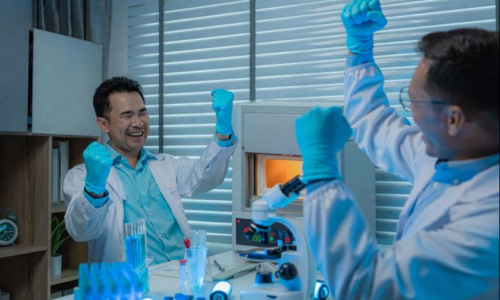
The modern laboratories require accuracy, reproducibility, and the ability to have full-time control over thermal processes. The performance of heating equipment becomes the decisive factor of the accuracy of the experiment and its working efficiency as the requirements of the research evolve. In the Bionics Consortium, we work closely with research laboratories, academic establishments as well as industrial R&D to assist in upgrading laboratories with high-performance laboratory furnaces that are reliable, safe and cost-effective.
Today more than ever, laboratory workflows are more data-driven and compliance-oriented. The outdated furnace systems have difficulties with providing stable temperature, reliable, and consistent results, and protective measures.
A modern Laboratory Furnace guarantees strict thermal regulation, less heat loss, and reliability. By upgrading your lab furnace you will achieve better productivity and confidence in the test results of the laboratory, as the present lab furnace requires a modern upgrade to support the additional services or the expansion of the laboratories.
Labs are still using old systems that do not even make them aware of the consequences of using these systems on the quality of research. The following are some of the signs that the upgrade is required:
.webp "Upgrade Your Lab with a High-Performance Laboratory Furnace")
Bionics Consortium helps laboratories to upgrade their furnace for laboratory use due to the performance limitation beginning affecting their results and efficiency.
The maximum temperature rating is not the only feature that makes a high-performance furnace. The real importance lies in the precision and consistency of the transfer of heat throughout the chamber.
Key aspects of high performance laboratory furnaces are temperature homogeneity, digital PID controlled systems, constant ramp and soak programming, and low thermal drift. Even minor variations in furnaces in chemistry labs may affect the result of the experiment, so consistency in performance is required.
High-performance furnaces are used in many laboratory applications. They are widely applied to the thermal decomposition of materials, thermal analysis of their ash content, and controlled testing of materials in a furnace in a chemistry lab.
Industrial research and quality control use furnaces in order to sinter, anneal and heat treat materials, and to conduct experimental research in materials science and chemical engineering fields. Academic institutions Industrial research and quality control labs are used to sinter, anneal and heat treat materials, and experimental research in the fields of materials science and chemical engineering. Bionics Consortium provides furnace solutions that meet these different application requirements.
Following consideration should be made when upgrading furnace in lab:
Bionics Consortium also helps laboratories to choose the furnace configuration that gives the best performance, safety and long-term working performance.
The laboratory furnace price is based on a number of technical and operating factors. Cost is affected by temperature capability, volume of a chamber, complexity of the control system, quality of insulation and safety features.
In terms of analysis, the laboratory muffle furnace price usually represents whole equipment containing insulation, uniformity of temperature, and precision of the controllers. Equally, lab furnace price are compared based on the energy efficiency, maintenance schedule, and the lifespan of the components of the furnace as opposed to the initial price.
A high-performance laboratory furnace leads to a greater repeatability of the experiment, minimization of error in processing, and efficiency of the whole workflow. It also allows researchers to have greater thermal stability and laboratories gain greater confidence in safety and compliance.
With the addition of the advanced furnace equipment provided by Bionics Consortium, laboratories will have the time to concentrate on the research results instead of having to deal with equipment constraints.
When choosing the correct furnace, one has to know the purpose of the application, future research objectives, and the working limits. The decision should be made based on the factors of temperature range, frequency of use, sample size, and service support.
Laboratories have been supported by Bionics Consortium with its expertise in laboratory heating systems and through all levels of support such as evaluation, selection, installation and long term maintenance processes.
The lack of effective cooling of a running water cooler may be caused by insufficient water circulation, filtered out filters, low airflow, and inefficiency of a pump and fan. Efforts to heat the water may be slackened by blocked pipes, air bubbles, dusty pipes, or low water levels even with power-ON. The initial symptoms are the prolonged cooling period, normal temperature water, and peculiar noise. Early resolution of such concerns eliminates compressor stress and expensive repairs.
Yes, the cooling stability depends on the direct influence of water cooler capacity. A 5 litre water cooler cools easily but it turns off easily in high traffic areas hence unsuitable in the shared areas. With repeated usage, a 20 litre water cooler works efficiently but needs a stronger airflow and additional cooling time. Numerous complaints associated with cooling are linked to small capacity and not faulty units.
Clogged or dirty filters cut off the flow of water, raise inside pressure, and lower the cooling efficiency. Due to poor water quality, there is mineral scaling that prevents surfaces of heat transfer. This causes the system to overwork whilst providing poorer cooling. Frequent change of the arter and the use of clean water will keep the cooling steady, will help improve the taste and increase the life of the system.
Long term cooling performance is dependent on consistent maintenance. The monthly tank cleaning ensures that the insulation is not contaminated, the weekly pump and fan inspection is conducted to make sure the circulation works correctly, the filters are changed on time and the compressor is serviced monthly to help in the efficient removal of heat. Such measures will avoid slow cooling wastage and minimize the chances of breakdowns.


Connect with us for your business enquiries. Generally, we respond within a day.