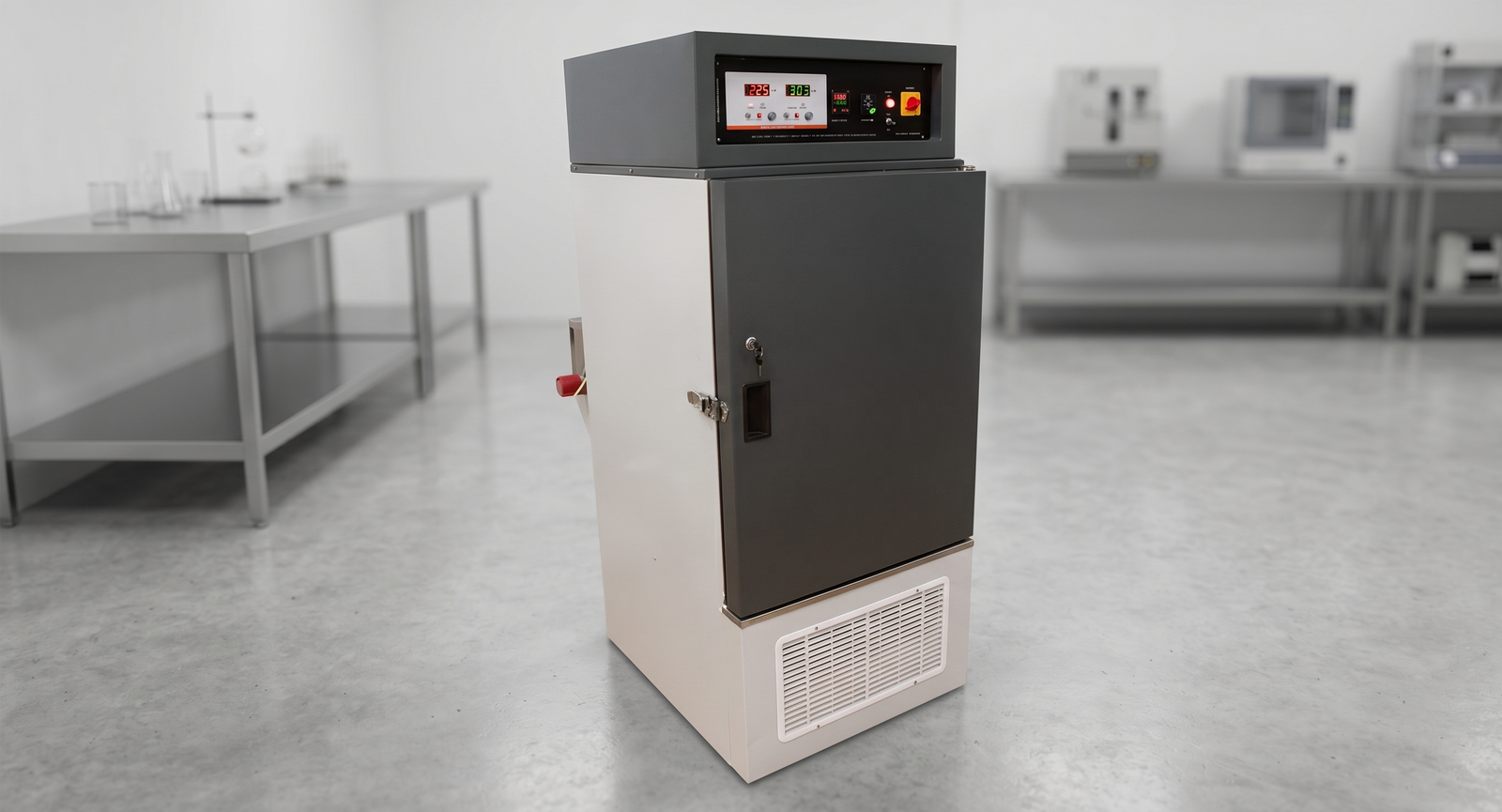
Any change in humidity throughout the testing process can make the whole validation inaccurate. This is one of the major factors that drive industrial purchasers to spend time comparing humidity chamber price before placing an order. Pharmaceutical stability testing, electronics reliability analysis or environmental simulation, the chamber is required to maintain stable temperature and humidity conditions constantly without performance drift.
Companies commonly start by comparing price, but the biggest problems are generally after installation. Weak internal engineering causes uneven humidity circulation, delayed recovery time and unstable chamber performance. That’s why expert labs and manufacturing businesses are now checking airflow balance, insulation quality, controller stability and humidity response before a conditioning chamber is finalised.
A well-engineered conditioning chamber maintains consistent testing conditions for longer durations and helps labs avoid wasteful retesting, shutdowns and calibration disruptions. Buyers who want a reliable humidity cabinet normally pay more attention to operational reliability, testing consistency, service support, and long equipment life, rather than simply comparing quotations.
Humidity chamber price The main difference in price is primarily based on technical specifications, quality of chamber construction and testing needs. Two chambers may look identical from the outside but the technical quality can be totally different within.
One big thing is chamber capacity. Small laboratory models used for routine sample testing will of course cost less than huge industrial systems used for bulk product validation or environmental simulation.
The temperature range at which the device can operate also influences the overall cost. Standard-designed chambers require less complex refrigeration systems, but wider ranges require more powerful compressors, better insulation and superior airflow architecture.
Humidity stability is also very important during selection. Industries like medicines and electronics normally need steady RH regulation with low variation. Manufacturers do this with improved sensors, steam generating systems and airflow circulation designs, all of which increase the overall price of the temperature chamber.
Pricing also changes considerably in the controller system. Basic controllers are good for regular testing, but industrial purchasers prefer PLC touchscreen systems that include programmed cycles, USB data logging, Ethernet communication, and software ready for validation.
The quality of the inside construction is just as important. The most reliable humidity cabinets have stainless steel inside because long term exposure to moisture can harm poor grade materials.
Pricing is also affected by automation features, safety precautions, remote monitoring, alarm systems and calibration support.
Buyers of humidity chamber pricing in India may get a wide range of categories based on application kind and testing complexity.
The entry level laboratory chambers typically start at roughly INR 85,000 and go up to approximately INR 1.8 lakh. These models are generally utilised in educational establishments, small laboratories and basic environmental testing activities.
Mid-range pharmaceutical and research chambers are normally in the range of INR 2 lakh to INR 6 lakh. The systems feature enhanced humidity accuracy, configurable test cycles, better airflow management and data recording functions.
The large industrial conditioning chamber systems for continuous environmental simulation or stability testing might be from INR 7 lakh to INR 20 lakh or more. Pricing goes up much further if you need certain sizes, GMP validation assistance, low humidity operation, or multi-stage automation.
Most manufacturers won't be able to provide you an exact quote without first discussing the testing application, operating range, and chamber usage conditions.
|
Parameter |
Typical Specification |
|
Chamber Capacity |
80 Liters to 1000 Liters |
|
Temperature Range |
-20°C to +150°C |
|
Humidity Range |
20% RH to 95% RH |
|
Controller Type |
PID / PLC Touchscreen |
|
Display |
Digital HMI Display |
|
Interior Material |
SS 304 Stainless Steel |
|
Accuracy |
±0.5°C / ±2% RH |
|
Power Supply |
220V / 415V |
|
Safety Features |
Over Temperature Protection, Compressor Safety, Low Water Alarm |
Apart from standard specifications, buyers should also ask about airflow uniformity, refrigeration brand, insulation density, sensor quality, and maintenance accessibility because these factors directly influence long-term performance.
|
Feature |
Humidity Chamber |
Standard Temperature Chamber |
|
Humidity Control |
Available |
Not Available |
|
Main Usage |
Environmental Simulation |
Heating & Cooling |
|
Testing Capability |
Combined Temperature & RH Testing |
Temperature Testing Only |
|
Accuracy Level |
Higher Environmental Stability |
Basic Temperature Control |
|
Cost |
Higher |
Lower |
|
Common Industries |
Pharma, Electronics, Packaging |
General Laboratory Work |
Many buyers initially compare humidity chamber price with ordinary ovens or temperature chambers, but both systems serve different purposes. A humidity chamber is designed for environmental testing where moisture control is equally important as temperature stability.
There are certain places where humidity chambers are widely employed because of the effects of the environment on product functionality and quality.
The pharmaceutical sector employs conditioning chambers for conducting stability and shelf life testing. In the electronic industry, these devices are employed for humidity testing.
In the food and packaging industries, these chambers are employed for conducting product storage and packaging testing.
Other major end-users include automotive, paint coating, aerospace, and polymer sectors, where the environmental testing chambers are used to determine the behaviour of their products under variable climatic circumstances.
Environmental testing failures can delay approvals, impact manufacturing schedules and increase operational expenses. This means corporations are looking at chamber reliability now more than just the price of the equipment.
Bionicro has been manufacturing laboratory and industrial testing equipment in India for over 25 years. The company’s engineering-driven manufacture and reliable chamber performance are among reasons that industrial purchasers chose it.
The company offers tailored humidity cabinet solutions based on actual testing requirements rather than a single standard arrangement for every application. Prior to finalisation, buyers receive technical help on chamber sizing, humidity range selection, airflow requirements, and controller alternatives.
ISO Certified manufacture, reliable operating performance, calibration support, installation aid, and pan-India service availability, helps enterprises to sustain uninterrupted testing operations.
Accurate humidity management, strong insulation quality and validation-ready chamber structure are particularly appreciated by customers for pharmaceutical and research applications.
Outside, most chambers may look the same. The real difference shows up only with repeated use - particularly in the constancy of airflow, humidity recovery and operating stability.
Bionicro considers airflow balance, humidity stability, insulation durability, proper environmental recovery during continuous operation, particularly important. This enhances the reproducibility of the tests and minimises validation problems caused by unstable chamber conditions.
The company also provides technical consultation before manufacturing, assisting buyers in choosing the proper specifications based on testing load, operational conditions and future expansion needs.
Transparent pricing, installation instructions, and solid support also enable industries to prevent operational problems after purchase.
The appropriate choice of humidity chamber has a significant impact on the accuracy of the testing, the validation of the product, the consistency of the operation and the maintenance costs in the long run.
The procurement phase may favour lower prices, but operational costs tend to increase over time due to unstable chamber conditions and constant maintenance issues. That is why seasoned consumers would assess engineering quality, test stability, and manufacturer support before comparing humidity chamber price.
If you are thinking about purchasing a conditioning chamber, humidity cabinet, or industrial environmental testing system, review your testing application carefully before finalising specifications.
Get precise estimates, chamber specs, technical consultancy and customised testing solutions suited for industrial reliability.Bionicro Pvt Ltd
Humidity chamber price in India usually starts from around INR 85,000 depending on size and specifications.
Humidity chambers are used for stability testing, environmental simulation, and product validation.
Most chambers operate between 20% RH to 95% RH.
A humidity chamber controls both temperature and humidity, while a temperature chamber controls only temperature.
Pharmaceutical, electronics, food, packaging, and research industries commonly use conditioning chambers.

Connect with us for your business enquiries. Generally, we respond within a day.