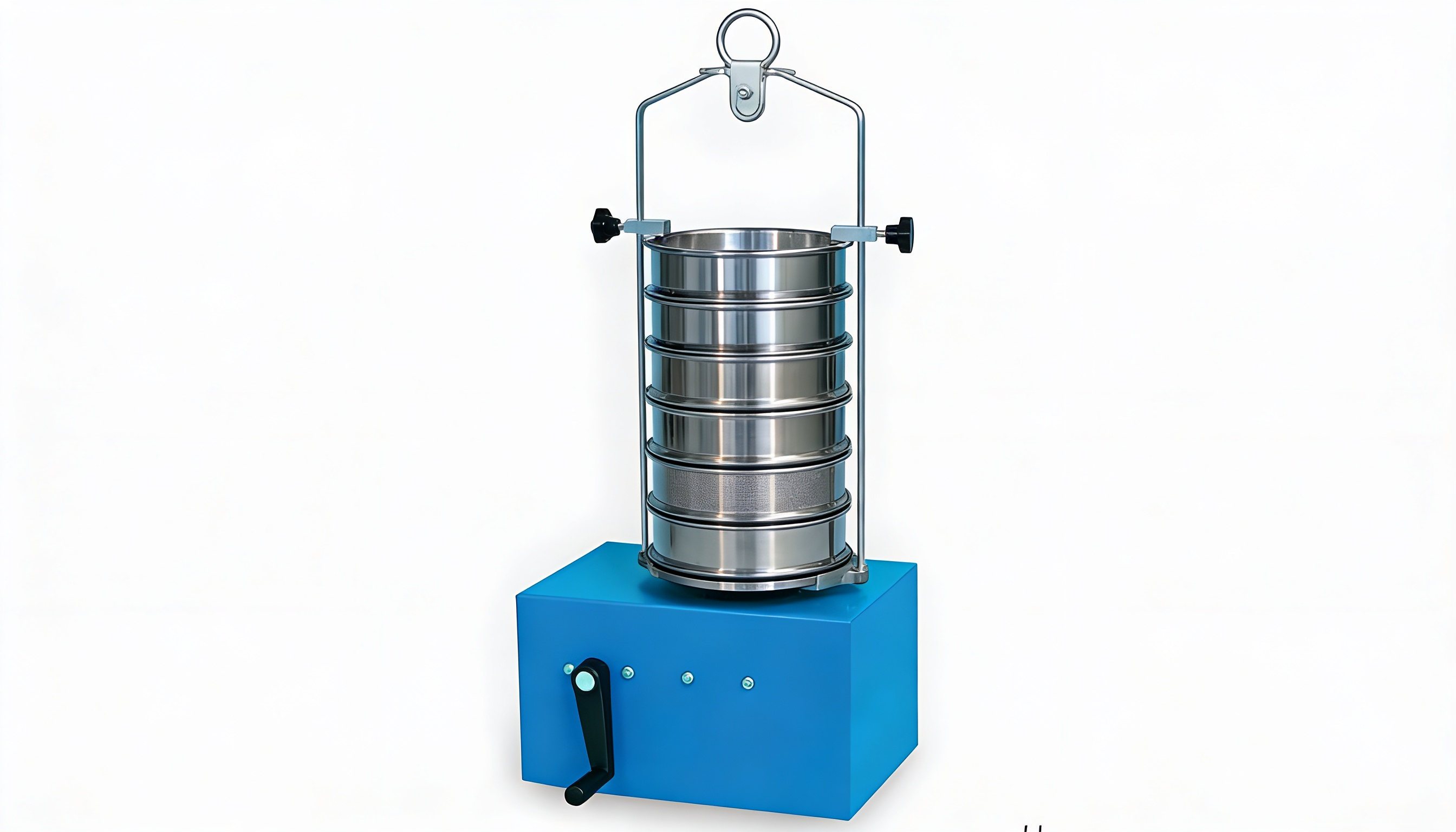
Particle segregation forms the basis of quality control and research in many industrial and construction projects. If you are associated with any of these industries—pharmaceutical, construction, food, and science—then you must be aware of how important sieve shakers are!
Choosing sieve shakers from trusted sources becomes all the more important at a time when the quality and durability of the product cannot be compromised. This blog will talk about everything that you wanted to know about the product and the best platform for procuring the best-in-class sieve shakers.
Widely used in laboratories and more, a Sieve Shaker Machine carries stacked sieves. It helps deliver a controlled motion. The motion could be vibratory, gyratory and tapping. These motions help in the segregation of particles on the basis of size. The shaker consists of a mesh (very fine). This mesh allows every small particle to pass through it, leaving behind the larger particles on the upper level. This process is especially helpful as it removes the chances of human error.
Let us first talk about the traditional manual sieving. Being in existence for decades, perhaps centuries, manual sieving has certain limitations.
These limitations are taken care of with sieve shakers. They deliver controlled motion and thus consistent results at all times. This consistency is vital for many facilities, including the research ones.
The working of a sieve shaker machine is extremely simple.
The product comes in different mechanical shaker styles—each suited to specific material types and applications:
|
Sieve Shaker Type |
Best For |
Key Advantage |
|
Mechanical (Tap/Oscillation) |
Coarse & heavy materials (soil, aggregates) |
Strong physical movement for robust samples |
|
Electromagnetic sieve shaker |
Fine powders, delicate materials |
Controlled, consistent motion with less noise |
|
Gyratory |
Fragile particles, precision labs |
Circular motion reduces particle damage |
|
RO-Tap |
Industry standard QC labs |
Combined rotation and tapping for thorough separation |
This table compares the different types, helping you select the ones that meet your requirements.
Decades of industry experience have let Bionics Consortium offer sieve shakers and other laboratory equipment that suit many industries. They are one of the most trusted shaker suppliers and manufacturers in India. The platform is ISO 9001:2008 certified and has been in the market for more than 25 years now.
Here is why it is better than its contemporaries.
Bionics Consortium only deals in shakers that are perfectly engineered. Be it the Electromagnetic Sieve Shaker or any other type, it offers constant motion control. They work efficiently for a long time without calling for any need for replacement.
Here are some of the uses of sieve shakers:
Here are some features
The product is used in various industries. Some of them are as follows:
In the pharma industry, particle separation is vital to ensure effective drug dissolution, stability, and correct dosage.
The size of the particles influences the effectiveness of the concrete.
In the food industry, particle grading is important, as uneven grading results in unwanted texture and also affects the quality of the food or the beverage.
In chemical industries, the particles of the same kind with slight differences are required to be separated. Sieve shakers are extremely important in such situations.
In research facilities, the data on particles is collected for potential use in material engineering and soil industries.
You can select the right product by doing the following:
Here is a set of commonly asked questions related to sieve shakers and their answers.
You can do just that by properly maintaining the shaker. It does not take a lot of effort, but simple steps are needed.
A Sieve Shaker is a vital product used in many processes, including analyzing materials so that they could be used further in a plethora of processes. Procuring the product from a trusted source like Bionics Consortium lets you receive products that are of the highest quality. The platform is ISO certified and has been serving businesses for the last 25+ years. They also deal in laboratory equipment, including furnaces, laboratory ovens, laboratory circulators, glove boxes, and many more.
Have queries? Let us connect now.
An electromagnetic sieve shaker uses magnetic impulses for vertical vibration, ideal for fine materials, while RO-Tap combines tapping and rotation for thorough separation, especially useful in quality control labs.
Depending on the model, many industrial shakers can stack 6–12 sieves, allowing detailed size distribution analysis.
Yes — constructed to meet standard specifications and consistent with common testing procedures used in labs.
Some models support both dry and wet applications, but always confirm the specific model’s capabilities.
Automated shaking improves repeatability, reduces human error, and saves time compared to manual sieving.

Connect with us for your business enquiries. Generally, we respond within a day.