In a lot of pharmaceutical and chemical plants, filtration is not really the stage that creates trouble. The bigger headache usually comes later. Wet cake transfer. Long drying hours. Solvent smell across the production floor. Cleaning delays when the next batch is already waiting.
That is usually when production teams start looking seriously at an Agitated Nutsche Filter Dryer instead of continuing with separate filtration and drying systems.
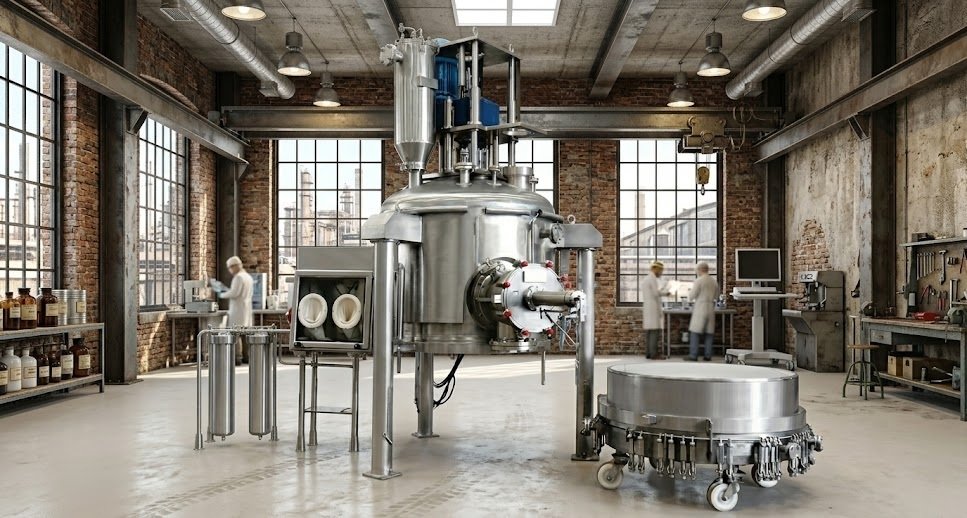
A properly designed agitated nutsche filter dryer keeps filtration, washing, drying, and discharge inside one closed vessel. Less movement of product. Less manual handling. In API manufacturing especially, operators already deal with pressure around containment and GMP observations. Open transfer between centrifuge and dryer only adds more complications.
At Bionicsro, most discussions around ANFD systems are not about brochure specifications. Usually somebody from the plant says the drying cycle is taking too long, or solvent recovery numbers are lower than expected, or cleaning between batches is becoming difficult after scale-up production.
Sometimes the issue is surprisingly small. One site had decent filtration performance but repeated vacuum instability near the final drying stage kept extending batch time. Another plant was struggling with product sticking below the agitator blades after repeated campaigns.
Those things rarely appear in technical catalogs.
The process itself is fairly direct.
Slurry enters the vessel and filtration starts through the filter plate and media. Liquid passes downward while solids remain inside and slowly build the cake layer. Once filtration is complete, the same vessel handles cake washing and vacuum drying.
The jacket provides heating while vacuum lowers solvent boiling temperature. Most systems typically operate around -650 to -700 mmHg during drying, although actual vacuum stability depends heavily on seal condition and utility balancing during production. The agitator keeps moving through the product bed so heat distribution remains reasonably consistent, though filtration cycle time still changes considerably depending on particle size, solvent viscosity, and cake thickness.
In practice though, product behavior changes everything.
Some materials filter quickly but become difficult during agitation. Others dry evenly in pilot batches but create hard lumps after production scale-up. A few sticky intermediates start depositing near the lower section of the vessel after continuous operation cycles, which eventually increases cleaning time.
Many first-time buyers focus heavily on vessel size. Later they realize drying consistency and agitator movement affect production output much more.
Pharmaceutical plants generally move toward closed nutsche filtration systems because handling wet material openly creates contamination and audit concerns.
API facilities are particularly careful here. Even basic transfer operations between filtration and drying stages can become problematic when solvent-heavy compounds are involved.
Chemical manufacturers often look at different priorities. Solvent recovery, corrosion resistance, operator exposure, and downtime reduction become more important during equipment selection.
Some facilities still operate vacuum tray dryer units for secondary drying applications or use hot air oven systems for simpler products. Development labs and pilot plants may also integrate laboratory furnace and humidity chamber equipment during testing and stability validation work.
One thing operators usually appreciate quickly is reduced handling.
With conventional systems, wet cake movement between machines creates extra cleaning work and increases chances of product loss around transfer points. In multi-product plants, that becomes frustrating during tight production schedules.
Closed-loop nutsche filtration simplifies a lot of this.
Batch control improves because the product stays inside one vessel from filtration to final discharge. Solvent containment also becomes easier to manage, particularly in high-containment pharmaceutical environments where operator exposure and airborne contamination become part of GMP audit discussions. Plants dealing with aggressive solvents usually notice the difference around the production area fairly quickly once open transfer stages are reduced.
Still, these systems are not maintenance-free.
Agitator seals need regular checking. Filter cloth condition affects filtration speed more than many operators expect. Once the cloth starts partially choking, cycle time increases slowly batch after batch until production teams finally stop the line for maintenance.
That usually happens at the worst possible time.
Most facilities do not replace existing systems just because newer equipment is available.
Usually something operational pushes the decision.
Repeated cleaning delays. High solvent losses. Moisture inconsistency after drying. Operator safety observations. Sometimes GMP audit pressure alone is enough for management to reconsider open filtration systems.
Anfd dryer systems help stabilize these areas because the entire cycle remains more controlled.
Though equipment design matters quite a bit here. Poor discharge arrangements or weak agitator design can create their own problems later during production. Vacuum performance on paper and vacuum stability during continuous operation are often two different things.
That part gets overlooked surprisingly often during procurement discussions.
Material selection depends mostly on process chemistry and cleaning requirements.
SS304 works for some applications, though pharmaceutical manufacturing generally prefers SS316 because cleaning validation and corrosion resistance become easier to manage long term. More aggressive solvents may require Hastelloy construction.
The vessel typically includes a heating jacket, agitator assembly, filtration plate, vacuum system, and bottom discharge arrangement. Some plants want full PLC automation with CIP integration because manual cleaning validation becomes difficult during frequent product changes.
Internal finishing quality also matters more than many first-time buyers expect. Poor weld finishing eventually creates product hold-up areas, particularly with sticky compounds and fine powders. Pharmaceutical installations often demand smoother internal surface finishes because residue buildup near weld joints can create cleaning validation difficulties after repeated production campaigns. Electropolished surfaces are sometimes preferred where cleaning consistency and containment requirements remain strict.
Most operators notice those problems only after several production campaigns.
Vacuum drying changes process behavior significantly compared to conventional drying systems.
Lower boiling temperature under vacuum helps remove solvents without exposing products to unnecessary heat. That becomes useful for heat-sensitive APIs and specialty intermediates where thermal degradation creates quality issues later.
Solvent recovery is another reason many chemical plants invest in agitated filter dryer systems. In solvent-heavy production, recovering even part of the vapor load affects operating cost over time. Properly balanced systems can recover a significant portion of evaporated solvent through condenser integration, although actual recovery efficiency depends heavily on vapor load, condenser sizing, and utility stability during continuous production.
Though recovery efficiency depends heavily on condenser sizing, vacuum consistency, and utility balancing. During commissioning, some plants expect aggressive solvent recovery immediately and later discover the utility setup was never balanced properly for actual operating load.
Agitated Nutsche Filter Dryer pricing varies considerably depending on process conditions.
Capacity is only one factor. Material grade, filtration area, pressure rating, automation level, internal polishing, heating arrangement, and solvent recovery integration all affect commercial cost.
A pharmaceutical-grade nutsche filter dryer with automation, explosion-proof controls, and CIP system will naturally cost more than a simpler chemical process setup.
From a practical standpoint, buyers should also evaluate maintenance access and cleaning practicality instead of comparing only initial machine pricing. Difficult maintenance eventually costs more during production shutdowns.
|
Parameter |
Specification |
|
Capacity |
5 Liters to 20,000 Liters |
|
MOC |
SS304, SS316, Hastelloy |
|
Operating Pressure |
Vacuum to Positive Pressure |
|
Vacuum Range |
Up to 700 mmHg |
|
Heating Type |
Steam, Hot Water, Thermal Fluid |
|
Filtration Area |
Customized as per process |
|
Discharge System |
Bottom Discharge Valve |
|
Automation Option |
Semi Automatic / Fully Automatic |
|
Temperature Range |
Up to 200°C |
|
Application Industries |
Pharma, API, Chemical, Fine Chemical |
Traditional filtration setups usually involve separate equipment for filtration and drying. More transfer points. More operator handling. More cleaning work between batches.
An agitated nutsche filter keeps the process inside one contained system. Product recovery improves because fewer handling losses occur. Batch movement becomes easier to manage, especially where contamination control matters.
Drying performance also tends to remain more stable because vacuum and agitation work together inside the same vessel.
For simpler low-volume products, conventional systems may still work reasonably well. Once solvent-heavy or moisture-sensitive production increases though, those limitations start showing up quickly.
At Bionicsro, equipment discussions usually begin with process conditions rather than standard catalog models.
Different products behave differently during filtration and drying. Some crack easily during agitation. Others retain solvent longer than expected. A few materials create cleaning issues only after scale-up production starts.
Early awareness of all these aspects eliminates any possibility of changes to be made later on.
This customization due to the chemical nature of the process, manufacturing capabilities, need for solvent handling, automation, and pressure can be kept in mind. Coordination from the technical point of view is as crucial while commissioning as small problems will turn into big problems after commissioning.
Filter cloth problems usually don’t appear immediately. The cycle just starts becoming slower after repeated batches. Operators normally notice it first during production, especially when filtration that earlier finished comfortably starts taking extra time without any obvious reason.
Sticky products can also behave differently once regular manufacturing begins. Trial batches may discharge properly, but after continuous operation material sometimes starts settling around the agitator area and lower section of the vessel. Cleaning crews end up spending more time there than expected.
Vacuum issues are fairly common in solvent-heavy processes. Even small fluctuations from seals, utilities, or condenser imbalance can quietly increase drying time over long campaigns. On paper the cycle may still look acceptable, but actual batch completion starts drifting.
In multi-product plants, filtration speed is not always the biggest concern. Delays usually build up during cleaning, preparation, and batch changeover. Most production teams only start focusing on that after scheduling pressure increases.https://www.bionicsro.com/contact.html
It is used for filtration, washing, vacuum drying, and discharge inside one closed vessel system.
The pharmaceutical sector, API, specialty chemicals, and solvent industries use such machines widely.
It helps eliminate solvents from products through low temperatures without damaging temperature sensitive products.
Yes, because the solvent can be recovered and reused when required.
Capacity, level of automation, fabrication material, filter area, heating systems, solvent recovery among others
It depends on the nature of the product. Products like sticky compounds require frequent cleaning of agitation and filter components.
It offers protection against contamination and easy handling of products.

Connect with us for your business enquiries. Generally, we respond within a day.