Moisture analyzer price is rarely a single number, and anyone who has requested a few quotes knows why. One supplier quotes a compact unit for routine checks, another a high-resolution instrument with software and validation documents. Both are called a "moisture analyzer," yet they do very different jobs.
This guide explains what drives the price in India, how to read specifications, and how to choose a machine that fits your samples. It comes from a team with 26 years in laboratory instrumentation at Bionics Consortium, where the most common buying mistake is not overpaying but buying the wrong type of instrument. Exact prices depend on model, configuration, taxes and supplier terms, so no fixed figures are quoted here.
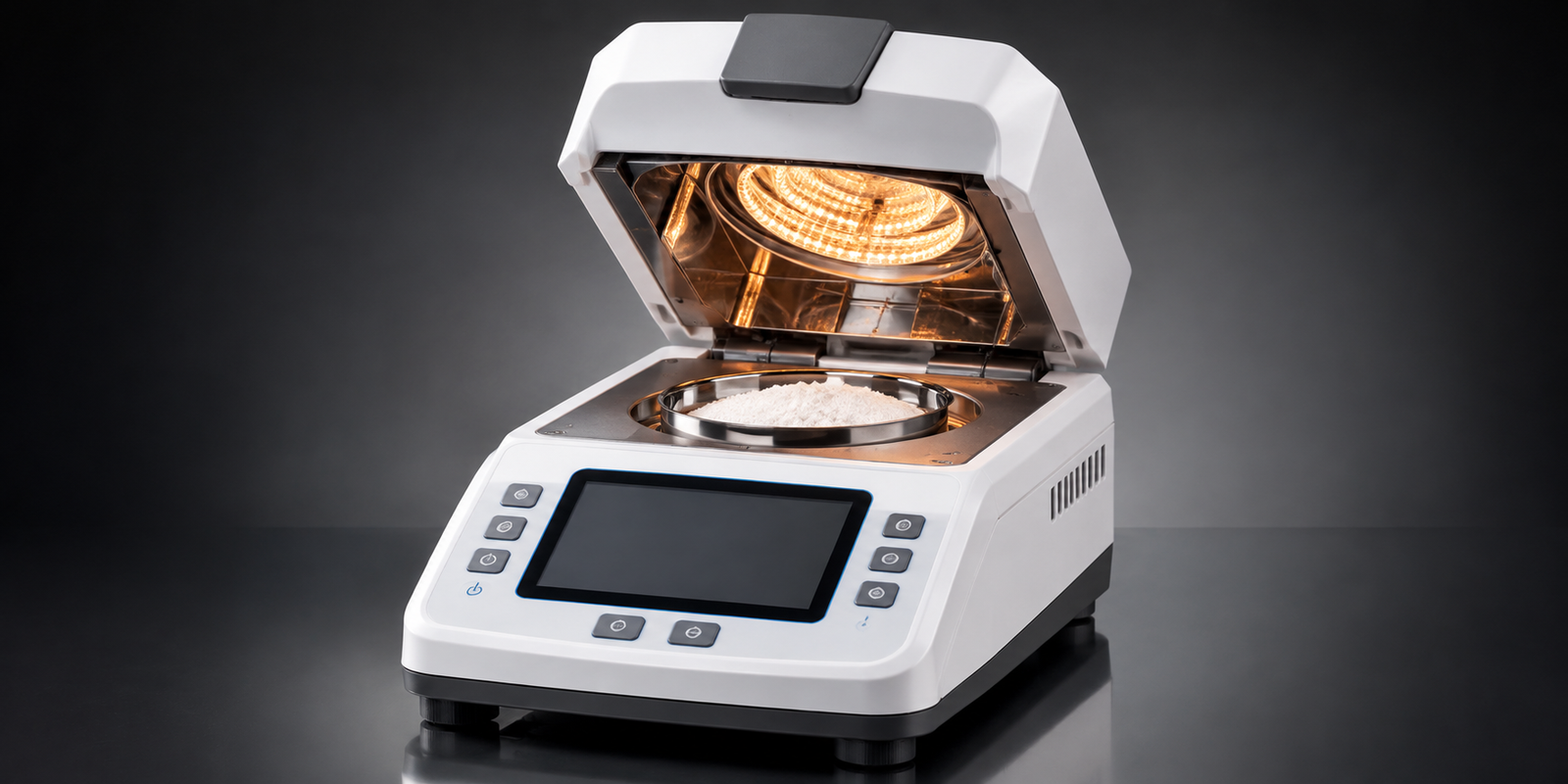
A moisture analyzer is a laboratory instrument that measures the moisture, and sometimes other volatile matter, in a sample. It combines a precision balance with a heating unit. The sample is weighed, heated, and weighed continuously until its weight stops changing. The weight lost is reported as a moisture percentage.
This is the loss-on-drying (LOD) or thermogravimetric method. Results arrive in minutes, and the operator can watch the drying curve develop.
Many labs still dry samples in an oven and weigh them before and after. The principle is the same, but an oven often takes hours and needs separate weighing and manual calculation. An analyzer heats, weighs and records in one unit. Many quality labs keep both: the analyzer for speed, the oven when a result must be cross-checked.
Price is the combined result of the factors below.
Only a handful of specifications decide suitability.
|
Specification |
Why It Matters |
|
Readability |
Affects accuracy on small or dry samples |
|
Maximum capacity |
Must suit your usual sample size |
|
Repeatability |
Shows how consistent results are |
|
Temperature range |
Must cover your drying method |
|
Heating method |
Affects heat-up speed and uniformity |
|
Drying programs |
Standard, rapid or gentle modes protect delicate samples |
|
Switch-off criteria |
Impacts result consistency and test time |
|
Connectivity |
USB, RS232 or printer output for records |
Match specifications to your sample, not the brochure headline. A very high-resolution analyzer is wasted on a bulk, high-moisture sample, while a basic unit may struggle with a low-moisture powder.
|
Type |
Best For |
Consideration |
|
Halogen / IR |
Routine lab tests |
Measures total weight loss |
|
Karl Fischer |
Trace moisture |
Needs reagents, training |
|
Portable grain meter |
Fast field checks |
Not a reference method |
|
Oven + balance |
Reference testing |
Slow, manual |
Halogen and IR units are what most people mean by a "moisture analyzer machine." They suit solids, powders, pastes and some liquids, but a sample that releases other volatiles or decomposes may give a misleading reading. Karl Fischer titration measures water through a chemical reaction, and instrument makers also recommend it for combustible materials that should not be heated in a loss-on-drying analyzer.
Common users include pharmaceutical labs (raw materials, granules), food and beverage producers (powders, grains, spices), chemical and plastics units, agriculture and feed, paper and textiles, and academic laboratories.
Answer these before requesting a quote:
A small food unit checking spice powders at goods inward usually needs a reliable general-purpose halogen or IR unit with stored methods. A pharmaceutical QC lab testing a low-moisture excipient under audit needs finer readability, documented calibration and data-integrity features.
Keep flammable materials away, never touch the heater cover or pan with bare hands, and do not test flammable or explosive substances in a loss-on-drying analyzer. Spread samples thinly and evenly, keep sample size consistent, place the unit on a stable surface away from drafts, and verify it regularly with a check material or test weights.
You will deal with manufacturers, authorised distributors and general traders. Manufacturers are typically strongest on design and specifications and often support directly. Authorised suppliers add application and local support through a distributor network. With general traders, verify origin, warranty and service route carefully.
Whichever you choose, ask in writing for the full specification sheet, warranty terms, calibration and installation scope, spare parts availability, a demonstration on your material, and a clear list of what the price includes.
With 26 years of experience in laboratory equipment, the Bionics Consortium team can help you shortlist the right instrument. Share your sample type, expected moisture range, daily test volume and compliance needs, and we will recommend suitable options. Request a moisture analyzer quote today.
The price of a moisture analyzer reflects how finely it weighs, how well it heats, how it records data, and how well it is supported after delivery. The cheapest quotation is rarely the best value if it does not match your samples or leaves out calibration and service. Start with your application, compare quotations on equal terms, and prefer a supplier who can demonstrate the instrument and support it for years.
It varies widely by model, balance resolution, heating type, software and support. A written quotation for your exact requirement is the only reliable figure.
Differences come from balance accuracy, heating technology, data features, build quality, and what is bundled, such as calibration, installation and warranty.
It weighs a sample, heats it, and records weight loss until the weight stabilises. The loss is shown as a moisture percentage.
An analyzer measures total weight loss on heating. A Karl Fischer titrator measures water specifically and suits trace moisture or heat-sensitive samples.
Often a few minutes, depending on the sample, temperature programme and switch-off criterion. This is generally much quicker than oven drying.
Readability, maximum capacity, repeatability, temperature range, heating method, drying programs, connectivity and calibration support.
No. Heat-sensitive samples may decompose, and flammable or explosive substances should not be tested in a loss-on-drying analyzer.
Follow the manufacturer's guidance and your quality system's schedule.
It is faster and more convenient for routine work. An oven is still used for reference testing, so many labs keep both.
Model and specifications, price basis and taxes, warranty, installation, calibration scope, accessories, delivery terms and after-sales support.

Connect with us for your business enquiries. Generally, we respond within a day.