Understanding Defibrillation and Why It Matters
When someone's heart falls into a dangerous rhythm during cardiac arrest, there's a very narrow window to act. Defibrillation is the process of sending a measured electrical pulse through the heart to break that abnormal rhythm and give it a chance to reset itself properly. The machine that does this — the defibrillator — has become standard equipment in almost every serious healthcare setting, and for good reason. At Bionics Consortium, we build and supply these devices for hospitals, ambulance services, clinics, and emergency teams across India, using biphasic technology that's gentler on the heart than older single-direction shock systems. If you're in the process of buying one, it helps to know what's actually happening inside the device, and how that translates into real outcomes on the ground.
Types of Defibrillators You'll Come Across
AED Defibrillator
An AED reads the patient's heart rhythm on its own and talks the operator through each step with voice and visual cues. Because it doesn't demand deep clinical training, it works well in ambulances, outpatient clinics, and any setting where the person nearby might not be a cardiologist.
Manual Defibrillator
Here, the physician sets the shock energy and timing directly. This level of control is why manual units are the go-to choice inside ICUs, CCUs, and operation theatres, where a trained clinician is already present and managing the whole resuscitation.
Biphasic Defibrillator
Instead of pushing current in one direction, biphasic units send it both ways during the shock cycle. That means the same clinical result at a lower energy level — less trauma to heart tissue, and it's why nearly every modern hospital has shifted toward biphasic as the default.
Portable Defibrillator
Built light and compact enough to grab and go, portable models matter most where the emergency doesn't wait for you to reach the equipment — ambulances, home care visits, and rapid-response teams.
What to Check Before You Buy
- Biphasic shock delivery, tuned for effective results at lower energy
- Both manual and automated modes on the same unit
- A screen that's readable at a glance, even under stress
- Battery life that holds up through long shifts or transit
- Built-in ECG and vitals tracking alongside the shock function
- Quick charge cycles so there's no waiting when seconds count
- A casing that can survive being moved constantly and roughly
- Step-by-step audio and visual guidance during use
- Adjustable energy output for manual operation
- The ability to log and pull up event data afterward
These aren't just spec-sheet items — each one shows up in how the device performs the moment it's actually needed.
Where These Devices Get Used
- Hospitals and multi-speciality centres
- ICUs and CCUs
- Emergency rooms and trauma wards
- Ambulances and mobile response units
- Outpatient clinics
- Medical colleges and teaching hospitals
- Operation theatres and cath labs
- Rural and community health centres
- Workplace first-aid stations and public emergency points
Technical Specifications
- Waveform type: Biphasic
- Operating modes: Manual and Automated (AED)
- Screen: High-resolution LCD/LED
- Power: Rechargeable battery, extended backup
- Monitoring: Live ECG and vital sign tracking
- Charging: Fast-charge for emergency readiness
- Build: Lightweight, shock-resistant housing
- Alerts: Combined audio and visual prompts
- Data: Event logging and retrieval
- Energy control: Adjustable range for manual mode
What Defibrillators Cost in India
Price mostly comes down to three things: the technology inside, how much monitoring it does beyond just shocking, and how portable it needs to be. Basic AED units sit at the lower end and suit fast-response settings well. Hospital-grade manual and biphasic systems with full monitoring cost more, simply because they're doing more. Bionics Consortium keeps pricing transparent and works out custom quotes for bulk orders — think hospital chains, ambulance fleets, or medical colleges outfitting multiple departments. Our honest advice: match the device to your actual clinical need first, then compare cost. Going cheap on equipment that has to work flawlessly during a cardiac emergency isn't where anyone should cut corners.
Buying Through Bionics Consortium
Manufacturer, Supplier, Dealer, and Exporter — All in One Place
We don't just manufacture; we also supply directly, work with dealers across India, and export to international buyers. For you as a customer, that means fewer middlemen, faster turnaround, and support that comes straight from the people who built the device.
Quality You Can Verify
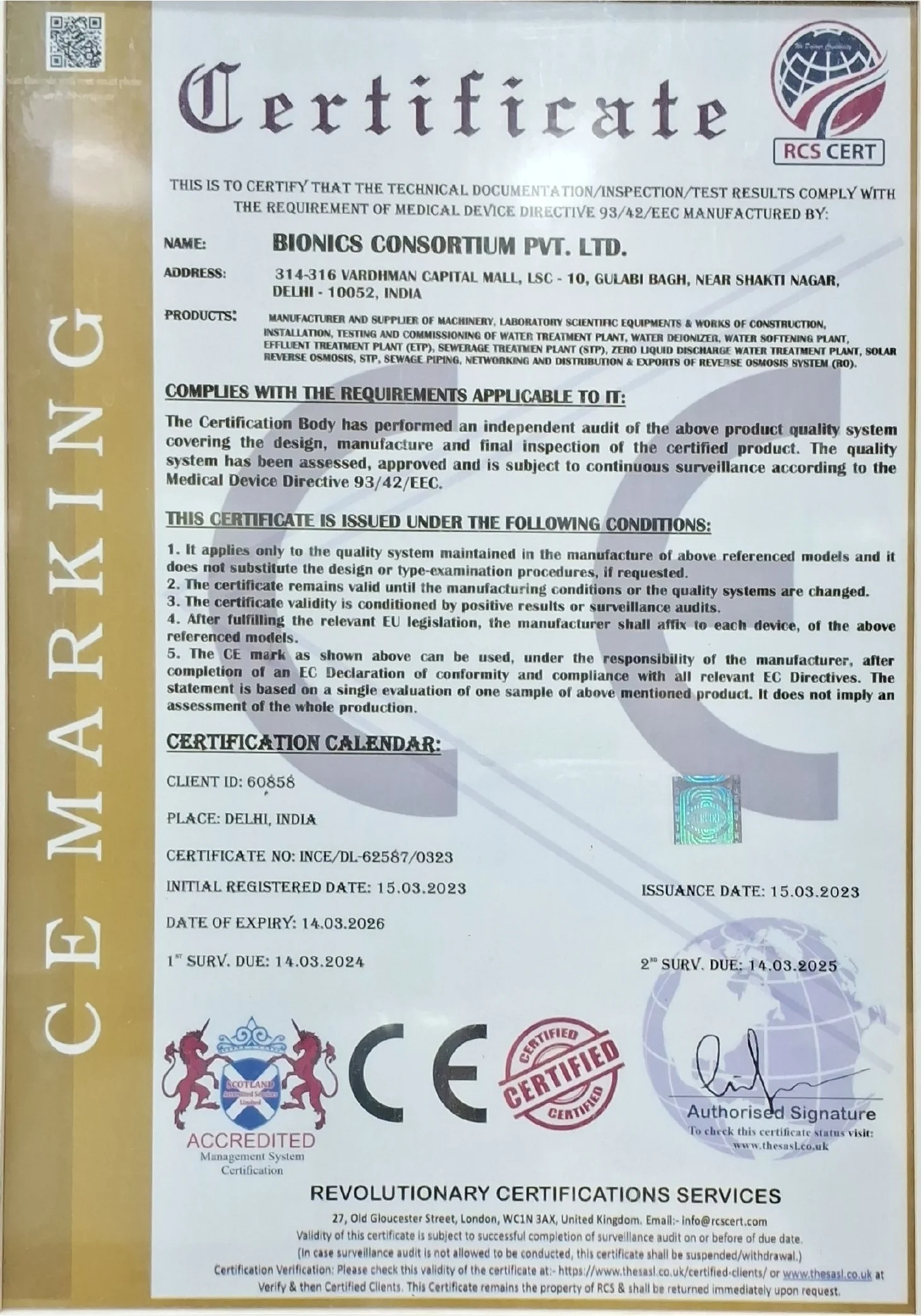
Every unit goes through rigorous testing before it ships, so it holds up to the standards hospitals, medical colleges, and regulators expect from emergency equipment.
Support After the Sale
Our involvement doesn't end at delivery. We help with installation, train your staff on operation, and stay available for servicing whenever it's needed.
Why Healthcare Buyers Choose Us
We build every defibrillator around dependable biphasic performance, sturdy battery life, and designs that work whether the device is sitting in an ICU or bouncing around in an ambulance. Our reach spans metro hospitals down to rural health posts, backed by a dealer and supplier network that gets equipment where it's needed without long delays. We also export internationally, holding the same build standards no matter where the device ends up. In short: one partner covering manufacturing, supply, honest pricing, and real support after you've bought.
Let's Talk
Picking the right defibrillator isn't a decision to rush. Reach out to Bionics Consortium for pricing, a live demo, or just to talk through what your facility actually needs. Whatever setting you're equipping — hospital, clinic, or ambulance — we'll help you get equipment built to perform when it counts.