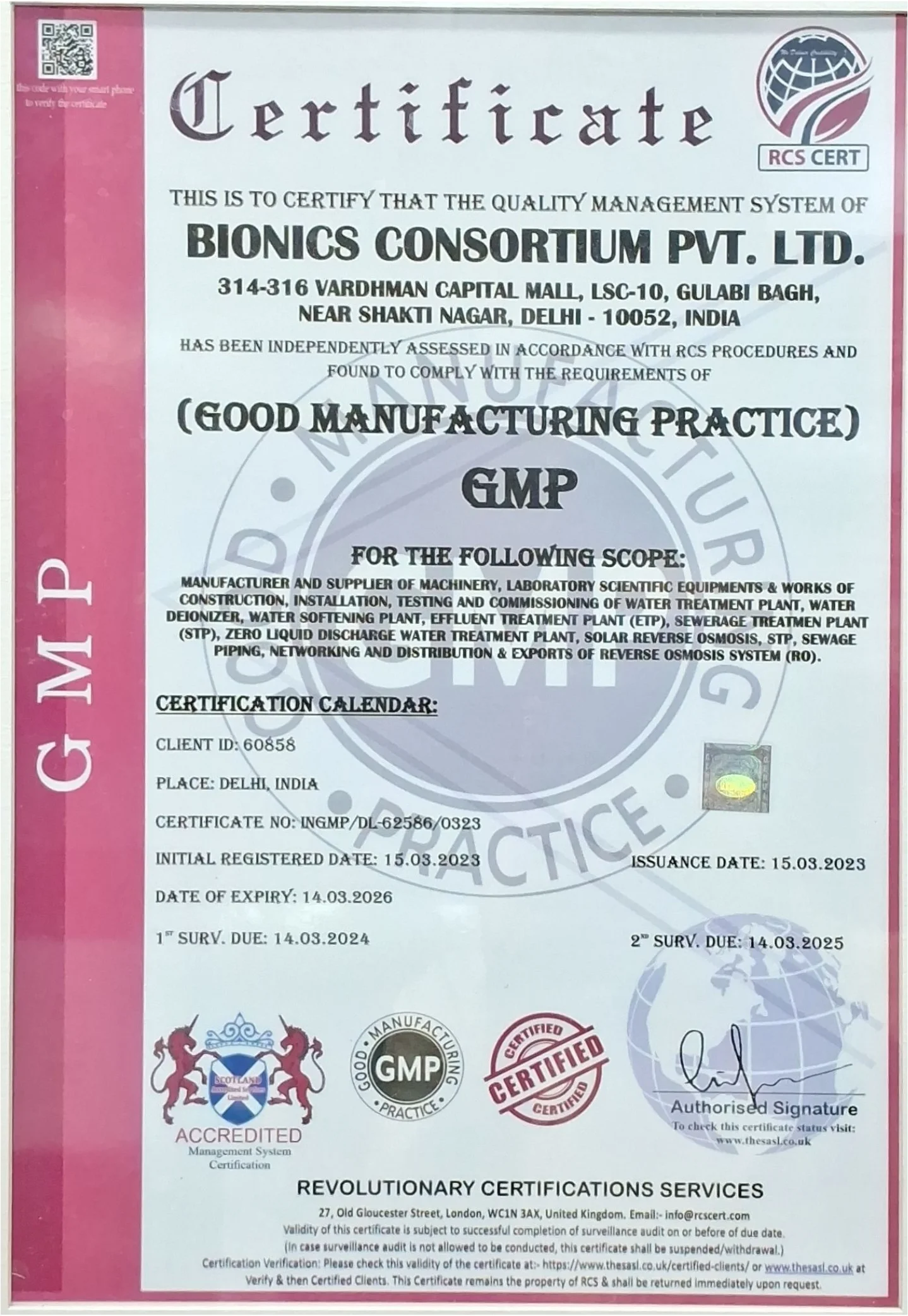
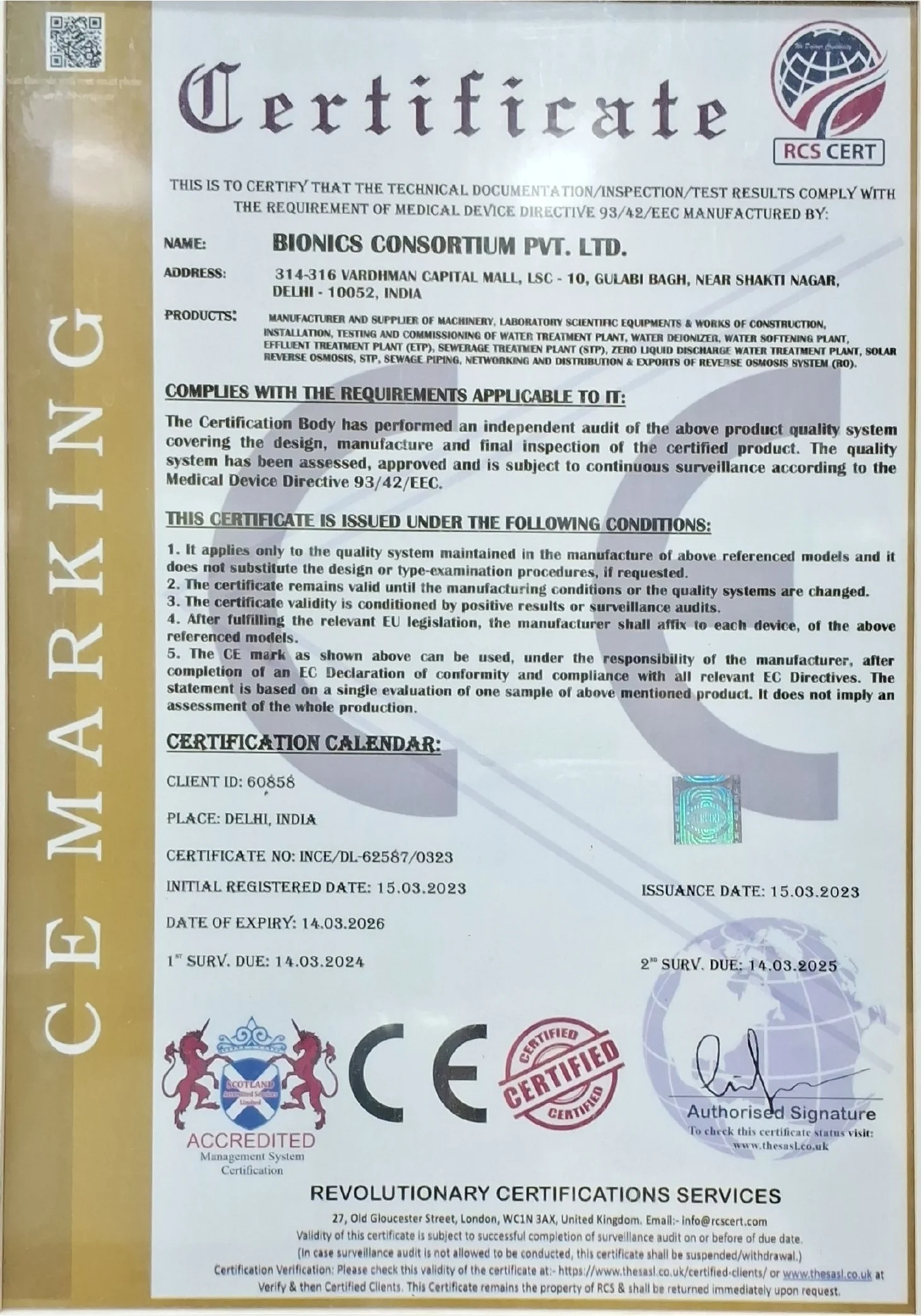
Bionicsro has supplied hot air ovens to Indian laboratories for close to three decades now. Our client base spans biomedical and pharmaceutical labs, hospitals, research institutes, chemical plants, textile mills, rubber units, and food manufacturers. Every oven that leaves our facility goes through the hands of engineers who build in microprocessor-based digital controllers, chart recorders, over-temperature cut-outs, and shelf-level configuration — not because a spec sheet demands it, but because that's what keeps a lab running without surprises. Our build quality holds up against international norms, including BS EN 61010-2-010, and we ship regularly to the Middle East, Saudi Arabia, the US, and Oman alongside our pan-India customer base. If you need pricing or a custom build, our team is a call or email away.
What is a Hot Air Oven?
Put simply, it's a chamber that sterilizes and dries using dry heat instead of steam. You'll find hot air ovens in biomedical, pharmaceutical, and industrial testing labs, usually running anywhere from just above room temperature up to 250°C. Because they don't rely on moisture, they're the natural choice for glassware, metal tools, powders, and oils — items where an autoclave's steam would do more harm than good. Sterilizing, drying, depyrogenating: a hot air oven handles all three, provided the temperature and hold time are set correctly for the load.
Types of Hot Air Ovens
Two broad categories cover most applications.
Gravity convection models don't use a fan at all. Heated air simply rises and pushes cooler air down, which creates slow, even circulation. It's not the fastest method, but it's efficient and gentle enough for drying powders or lightweight glassware that a fan might disturb.
Forced convection models use a motorized blower to push heated air through the chamber actively. Heat distribution is faster and more uniform, and the oven recovers quicker once the door's been opened — useful when you're running back-to-back cycles or need tighter temperature consistency across the load.
How a Hot Air Oven Works
Heating elements — usually built into the chamber walls or set beneath a false bottom — generate the heat, and either natural convection or a blower spreads it through the chamber. Working with a dealer like Bionicsro means you're not just buying a box that gets hot; you're getting equipment built around four things a lab actually needs:
Heating, first and foremost — bringing the chamber to a set temperature and holding it there, without drying out the air artificially. This alone covers a good chunk of pharmaceutical and materials-science work.
Sterilization comes next: holding a validated temperature long enough to kill off microorganisms on anything that can take dry heat, following the same logic as USP and pharmacopeial dry-heat guidance.
Drying is exactly what it sounds like — pulling moisture out of glassware, powders, or raw material samples. If your sample is heat-sensitive or holds a lot of moisture, lean toward a forced-convection unit; it's the safer bet.
Depyrogenation sits at the high end of the temperature scale, typically 250°C or above under a validated protocol, and it's what destroys bacterial endotoxins on glassware headed for parenteral or injectable use.
Why Choose Bionicsro
We've been building dry-heat equipment for 26 years, and in that time we've learned that no two labs want exactly the same oven. Tell us your chamber size, temperature range, and load type, and our engineers will build to that spec rather than push a catalog model that's close enough. Every order comes with IQ/OQ documentation support, a technical consultation before installation, and after-sales service — whether you're in Delhi or shipping to Oman, Saudi Arabia, the Middle East, or the US.
No two hot air ovens do exactly the same job, either. Capacity, dimensions, convection type, and maximum temperature all shift depending on what you're using it for, so it's worth thinking through the application before locking in a spec.
Operating Temperature
That depends on the manufacturer and the model, but Bionicsro ovens are generally specified up to 250°C for sterilization, depyrogenation, and drying work. Hold time isn't something to guess at — it should be confirmed against your actual load through validated temperature mapping. As a starting reference, a typical dry-heat cycle runs 160°C for two hours, 170°C for an hour, or 180°C for half an hour.
How Big Are Hot Air Ovens?
We build both bench-top and floor-standing units. Bench-top ovens suit routine glassware loads and smaller labs where space is tight. Floor-standing models are built for higher-volume pharmaceutical or industrial operations that need more chamber space per cycle.
Key Factors to Consider
Start with chamber volume, then temperature range and uniformity. For straightforward glassware sterilization, a validated stainless steel chamber usually covers you. If you're working with solvent-bearing samples, that changes things — you'll want explosion relief provisions and an airflow setup matched to the calculated solvent load, in keeping with standards like EN 1539.
Domestic Oven vs Hot Air Oven
A domestic oven and a laboratory-grade hot air oven aren't built to the same bar, even if they look similar from the outside. Lab-grade equipment is designed for repeatable accuracy, validated uniformity across the chamber, and a stainless steel liner that can take years of cleaning cycles without breaking down — construction that also supports IQ/OQ qualification. A kitchen oven simply isn't built for that kind of scrutiny.
Solvent Samples in a Hot Air Oven
Yes, but only if the oven is rated for it. Equipment handling solvent-bearing materials needs to meet safety standards such as EN 1539, and should come with explosion relief panels along with an airflow configuration sized to the solvent load you're working with. If you're unsure what your samples require, our technical team can help you confirm the right setup before you order.