Walk into any cell culture laboratory and ask researchers what matters most, and you'll hear familiar answers: reliable cell lines, consistent media preparation, contamination control, and reproducible results. What often receives less attention is the piece of equipment quietly supporting all of those goals every day—the incubator.
A CO2 incubator for cell culture is rarely the most expensive piece of equipment in a laboratory, but it is often one of the most influential. When environmental conditions remain stable, researchers can focus on experiments. When they do not, troubleshooting begins, timelines slip, and confidence in the results starts to fade.
Over the years, many laboratories have moved beyond asking, “Which incubator has the most features?” Instead, they ask a more practical question: “Which incubator will perform consistently under real working conditions?” That shift in thinking is important because the right system is not always the one with the longest specification sheet. It is the one that fits the application, supports daily workflows, and delivers reliable performance over time.
This guide is designed to help buyers make that decision with confidence.
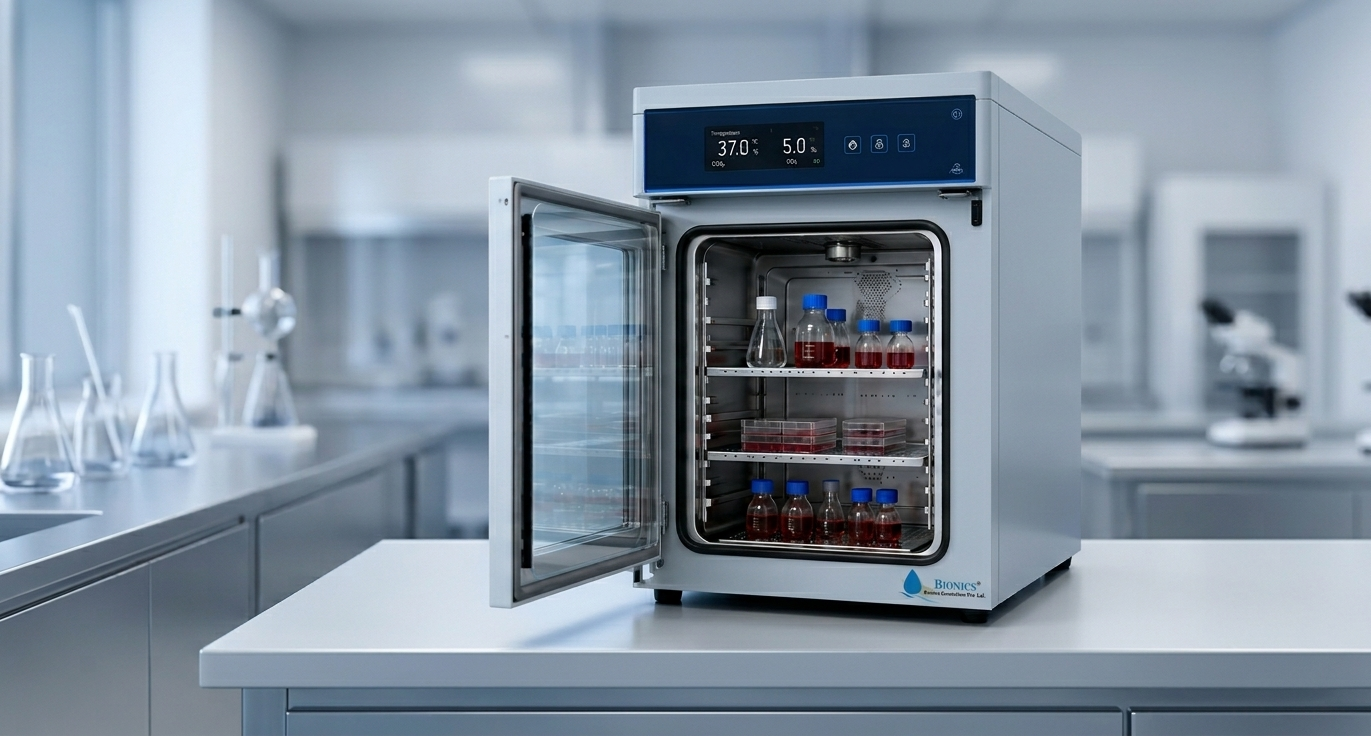
At its core, a CO2 incubator for cell culture is a controlled environment designed to support the growth of cells outside a living organism. Most mammalian cell cultures require a temperature close to 37°C, elevated humidity, and carefully controlled carbon dioxide levels. The incubator maintains those conditions continuously so cells can grow in a predictable environment.
That description sounds simple enough, but in practice, maintaining stable conditions is more challenging than many buyers initially realize. Laboratory doors open frequently. Samples move in and out. Researchers work on different schedules. Every interaction with the chamber has the potential to disturb the environment.
A well-designed incubator compensates for those disturbances quickly and quietly. Researchers rarely notice it doing its job—and that is usually a sign that the equipment is performing exactly as it should.
One of the most common mistakes buyers make is assuming that all CO2 incubators perform similarly because they advertise comparable temperature and CO2 ranges. In reality, day-to-day performance often separates an average system from an excellent one.
For example, imagine two incubators with nearly identical specifications. On paper, they appear interchangeable. Yet one may recover temperature and CO2 levels much faster after repeated door openings. Over the course of months or years, that difference can influence culture stability, laboratory efficiency, and even research outcomes.
Contamination is another area where design matters. Researchers who have lost valuable cultures to contamination understand that prevention is far less expensive than recovery. Features such as chamber design, sterilization capabilities, airflow management, and ease of cleaning often prove more valuable than buyers initially expect.
The goal is not simply to purchase equipment. The goal is to create an environment where researchers can trust their results.
Before comparing brands or requesting quotations, it helps to understand the CO2 incubator principle.
Cell cultures depend on a delicate balance between temperature, humidity, and carbon dioxide concentration. If any of these variables drift too far from the target range, cells can experience stress that affects growth and viability.
Temperature keeps cellular processes functioning normally. Carbon dioxide helps maintain the pH balance of culture media. Humidity reduces evaporation and helps preserve stable growth conditions.
Modern incubators monitor these variables continuously using integrated control systems. Whenever conditions change, the incubator responds automatically. In many laboratories, these adjustments happen hundreds of times each day without researchers even noticing.
Understanding the CO2 incubator principle allows buyers to focus on meaningful performance indicators rather than marketing language.
Many manufacturers provide a CO2 incubator diagram in product literature. While diagrams often look similar, they can reveal important differences in design philosophy.
Experienced buyers tend to focus on several areas:
A CO2 incubator diagram should not be viewed as a technical illustration alone. It is often a practical roadmap that shows how the equipment is likely to perform during daily use.
Not every specification carries the same weight. Buyers are often presented with long feature lists, but a handful of factors typically have the greatest impact on performance.
Choosing capacity is not simply about current sample volume. Laboratories frequently grow, projects expand, and workflows evolve. Buying too small can create limitations sooner than expected, while excessive capacity may increase operating costs unnecessarily.
One of the most important decisions involves sensor selection.
Thermal conductivity sensors remain common and can perform well in many environments. Infrared sensors, however, are often preferred in advanced research applications because of their accuracy and faster recovery characteristics.
Researchers care less about the advertised temperature range and more about how evenly conditions are maintained throughout the chamber. Uniformity often has a greater influence on experimental consistency than buyers realize.
In conversations with laboratory managers, contamination prevention consistently ranks among the highest priorities. Modern sterilization systems can significantly reduce maintenance challenges and help protect valuable cultures.
As compliance requirements continue to increase, many laboratories now expect alarms, data logging, remote monitoring, and user access controls as standard capabilities rather than premium options.
Questions about CO2 incubator price are understandable, but focusing only on the initial purchase cost can be misleading.
A lower-priced incubator may appear attractive during procurement, yet long-term costs often tell a different story. Maintenance requirements, calibration frequency, energy consumption, sensor replacement, and service support all contribute to the total cost of ownership.
Experienced buyers usually evaluate value rather than price alone. Equipment that performs reliably for years may ultimately prove more economical than a cheaper alternative that creates ongoing operational challenges.
Few brands are discussed as frequently as the Thermo Scientific CO2 incubator when laboratories begin evaluating options.
Thermo Scientific systems have developed a strong reputation in research environments because of their contamination control features, environmental stability, and monitoring capabilities. Similarly, a thermo CO2 incubator is often considered by facilities that place a high value on precision and reliability.
A CO2 incubator Thermo Fisher model may be the right choice for some laboratories, particularly those operating in highly regulated environments. However, buyers should resist the temptation to choose based solely on brand recognition.
The best approach is to compare technical performance, service availability, operational requirements, and long-term support before making a decision.
A biotechnology laboratory performing long-term mammalian cell culture studies began noticing inconsistent results between experimental batches. Media preparation protocols were reviewed, staff training was assessed, and contamination checks were performed, yet the variability continued.
The issue was eventually traced to environmental recovery performance inside an aging incubator. While the system still appeared functional, it required longer recovery periods after routine door openings.
Following an upgrade to a newer incubator with improved environmental controls, the laboratory reported more stable culture conditions and fewer interruptions related to contamination concerns. The lesson was straightforward: even when an incubator appears operational, performance limitations can quietly affect research quality.
We understand that laboratories are not all trying to solve the same problem. Some need maximum capacity. Others prioritize contamination control, compliance, or operational efficiency.
Instead of promoting a single solution for every application, we focus on understanding how the equipment will be used. That allows us to recommend systems based on actual laboratory requirements rather than generic specifications.
Our goal is simple: help researchers select equipment that performs reliably, remains easy to maintain, and supports long-term laboratory success.
Selecting a CO2 incubator is not simply a purchasing exercise—it is a decision that can influence laboratory productivity, culture viability, and research confidence for years to come.
If you are comparing options, planning a laboratory expansion, or replacing existing equipment, our team can help evaluate specifications, discuss application requirements, and recommend a solution that aligns with your goals and budget.
Contact us today for expert guidance, technical information, and a customized quotation.
It is a specialized chamber designed to maintain controlled temperature, humidity, and carbon dioxide levels required for growing cells outside a living organism.
The CO2 incubator principle involves regulating environmental conditions so cells can grow in a stable and controlled atmosphere.
A CO2 incubator diagram helps buyers understand chamber layout, airflow design, component placement, and maintenance accessibility.
Capacity, sensor technology, sterilization features, monitoring systems, service support, and overall build quality all influence pricing.
Yes. Many research, biotechnology, and pharmaceutical laboratories use Thermo Scientific CO2 incubator models because of their stability and contamination control features.
Service schedules vary by manufacturer and usage, but regular cleaning, calibration, and preventive maintenance are generally recommended.


Connect with us for your business enquiries. Generally, we respond within a day.