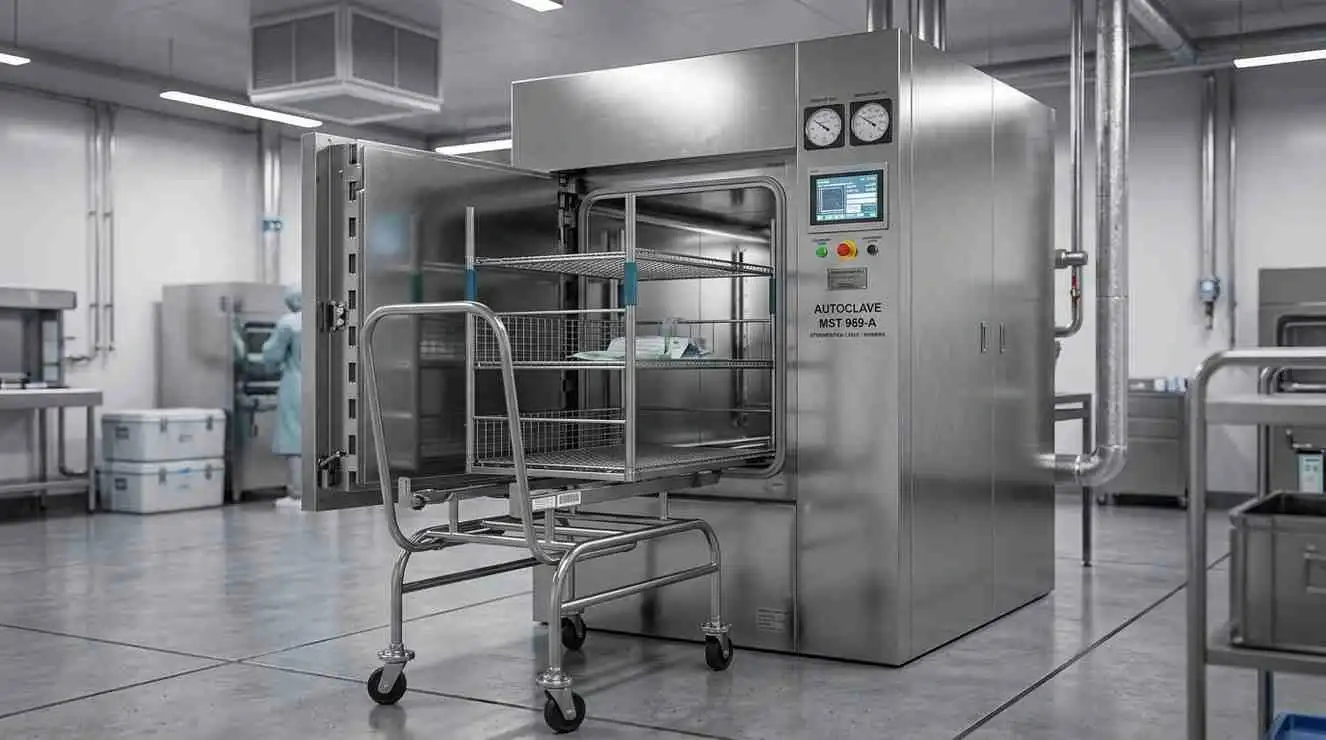
In laboratories, hospitals, and medical industries, sterilization is an important requirement. To increase the pollution-free environment, sterilization equipment reliability is important. For sterilization, autoclave machines are most important. The Autoclave Machine removes the bacteria and viruses from instruments and materials in high-pressure steam. Modern manufacturers play an important role in making the advanced autoclaves because they always ensure the efficiency, safety, and better performance across various industries. Manufacturers are regularly improving the machine with the new industry requirements. Industries easily grow with these innovations and maintain the strict protocols with operational efficiency.
In research laboratories, autoclaves are considered very important equipment. Without this, laboratories cannot make the environment pollution-free because it helps to remove and destroy the bacteria and other unwanted things that are not needed for the operations. The autoclaves have various technologies like programmable cycles, digital displays, and automatic shutdown features to ensure safe and accurate sterilization. These technologies help to improve the reliability and maintain the better result in testing.
Trivia
Autoclaves are often equipped with multiple safety systems, including pressure release valves and door locks.
Industrial autoclaves are commonly used in medical production industries, food processing, and biotechnology. When they require large-scale sterilization, they depend on Industrial Autoclave Manufacturers because manufacturers design the equipment for high volume and strict operations. Modern industry systems automate the pressure control, temperature regulation, and monitoring system. These sterilization cycles perform well. Also, manufacturers focus on durable material with equipment long life according to the industrial demands.
When you are looking to maintain the effective sterilization practices, Autoclave Machine Suppliers and manufacturers are very important for reliability and high-quality performance and offer the installation guide with maintenance services and support.
Some key advantages of working with trusted suppliers include
These services help organizations ensure that their sterilization equipment performs efficiently over the long term.
The Price of Autoclave Machines is a very important consideration before procuring them. It depends on several factors like automation level, material quality, and safety features, etc. For large industry heavy-duty applications, high investment is needed. But small Laboratory Autoclaves are typically affordable. Also before procurement, buyers know the requirements for their industry and their needs.
Here is the specification table of the autoclaves; with this table you can easily know the details.
| Parameter | Specification / Details |
|---|---|
| Sterilization Method | Moist heat sterilization using saturated steam under pressure |
| Operating Temperature | 121°C – 134°C |
| Operating Pressure | 15–30 psi (1.0–2.1 kg/cm²) |
| Sterilization Time | 3–60 minutes (depending on load & cycle) |
| Chamber Material | Stainless Steel SS 316 / SS 304 |
| Chamber Design | Cylindrical or Rectangular |
| Chamber Capacity | 50 L – 500 L (model-dependent / customizable) |
| Door Type | Manual, Semi-Automatic, or Fully Automatic with interlock |
| Air Removal | Gravity displacement / Pre-vacuum system for porous loads |
| Steam Quality | Dry saturated steam (≥97% dryness fraction) |
| Control System | Microprocessor / PLC with digital touchscreen display |
| Monitoring & Data Logging | Real-time temperature & pressure monitoring; optional USB/printer/Ethernet logging |
| Safety Features | Pressure relief valve, over-temperature cut-off, low water cut-off, door interlock, emergency stop |
| Drying System | Vacuum-assisted drying (optional) |
| Load Compatibility | Stainless steel instruments, borosilicate glassware, autoclavable plastics, textiles |
| Incompatible Materials | Heat-sensitive plastics, oils/fats, volatile chemicals, electronics |
| Utilities Required | Electricity (220–415 V), Soft / RO water, Drain line, Optional compressed air |
| Applications | Hospitals, laboratories, pharmaceutical industries, dental clinics, research institutes |
| Compliance & Standards | ISO 17665, EN 285, AAMI ST79, CE/GMP compliant (as applicable) |
| Optional Accessories | External steam generator, printer, USB data logger, validation documentation (IQ/OQ/PQ), customized chamber sizes |
| Warranty & Support | 12 months standard warranty, installation, commissioning, training, optional AMC |
For laboratory and sterilization equipment, India has become the hub of manufacturing, with many reliable Autoclave Manufacturers in Delhi making the advanced or enhanced version of autoclave systems to meet the domestic and international quality standards. Also, the manufacturer combines the modern machine with cost-effective production and high quality to get the best result in the laboratories and industries. With the reliable and trusted manufacturer industry growing easily, they also give good support and guidance. With all of these laboratories, give the best solution and good performance.
If you want to know which autoclaves are better for your requirements, vertical or horizontal, you can go through the following blog.
Vertical vs. Horizontal Autoclaves—Which One Should You Choose?
The Bionics Consortium provides the compact design for small clinics to heavy industrial research solutions. We are committed to delivering the best performance and good reliability according to the demands and requirements. We focus on quality, performance, and customer satisfaction. Also, we provide a wide range of equipment, including sterilization systems, laboratory ovens, shakers, and other important industrial systems related to laboratories. If you are ready to source the laboratory system for your industry, you can get in touch with us; we give you the best solution according to your requirements. Apart from this, we also provide laboratory equipment, Laboratory Circulators, and medical industry-related product solutions for your industry.
Nowadays modern autoclave manufacturing focuses heavily on innovation and efficiency.
Some recent developments in sterilization technology include:
Sterilization processes remain safe, reliable, and aligned with modern laboratory standards with these key innovations.
Trivia
Regular testing using biological indicators ensures that an autoclave is working properly.
Now autoclave technology is regularly involved with high demand in industry for sterilization and safety. Autoclaves are very important in laboratories to maintain pollution-free environments with better efficiency. Also, the manufacturer and suppliers are developing the reliability with technology for modern sterilization requirements. Selecting the good-quality machine or equipment is very important for the laboratories to improve safety and better operational efficiency in the sterilization processes.
The best manufacturing company for autoclaves is one that offers reliable equipment, quality certifications, advanced technology, and strong after-sales support. Companies like Bionics Consortium are known for providing dependable laboratory sterilization equipment along with other laboratory solutions such as ovens and shakers. Choosing a trusted manufacturer ensures better durability, consistent sterilization performance, and long-term operational support for laboratories and industries.
An autoclave machine is a sterilization device that uses high-pressure saturated steam to eliminate bacteria, viruses, fungi, and spores from laboratory tools and medical equipment. The process typically operates at temperatures around 121–134°C with controlled pressure, allowing steam to penetrate instruments and destroy microorganisms by denaturing their proteins. This makes autoclaves one of the most reliable sterilization methods used in laboratories, hospitals, and pharmaceutical facilities.
Autoclaves play a critical role in maintaining sterile conditions in laboratories and healthcare environments. They are used to sterilize surgical instruments, glassware, culture media, and biological waste before disposal. By eliminating harmful microorganisms, autoclaves help prevent contamination and reduce the risk of infections during medical or research procedures.
Before purchasing an autoclave, buyers should consider several factors such as sterilization capacity, chamber size, automation features, safety mechanisms, and maintenance requirements. It is also important to evaluate the Price of Autoclave Machines, warranty support, and after-sales service to ensure long-term efficiency and reliability in sterilization operations.
Industrial autoclaves are widely used in industries such as pharmaceuticals, biotechnology, food processing, chemical manufacturing, and research laboratories. These systems are designed to handle large volumes of materials and provide consistent sterilization for production tools, containers, and laboratory equipment.
Regular maintenance is essential to ensure safe and effective sterilization. Most experts recommend routine inspection, cleaning of chambers, checking pressure valves, and validating sterilization cycles periodically. Scheduled servicing helps maintain optimal temperature and pressure conditions, ensuring that the equipment continues to perform reliably.


Connect with us for your business enquiries. Generally, we respond within a day.