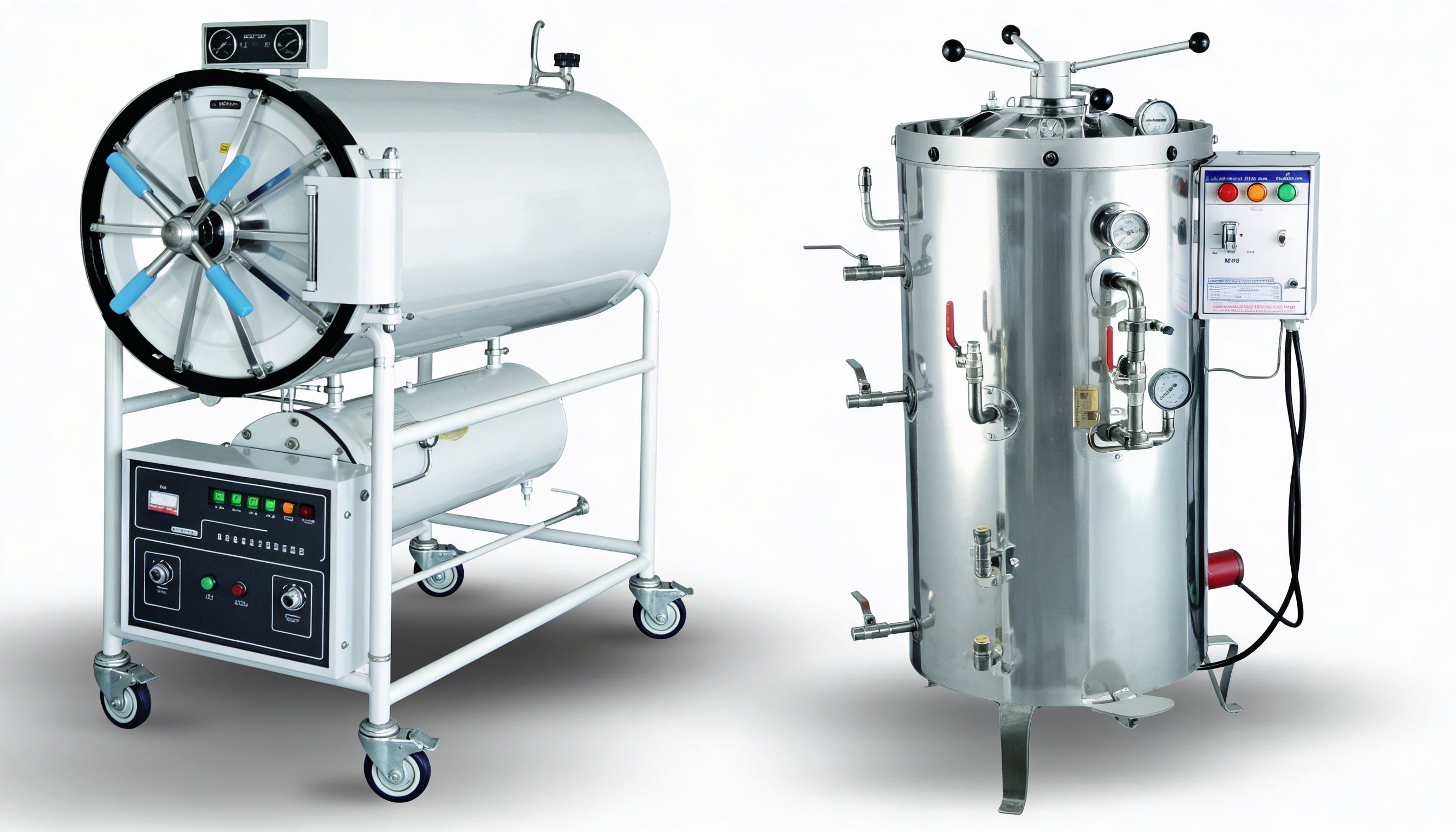
When it is time to update your laboratory or hospital unit, the machines you choose define how efficient your workflow will be for the next decade. For more than 25 years, Bionics Consortium has been serving various facilities, including high-performance biotech hubs in Hyderabad, established clinical research centers in New Delhi, diagnostic hubs in Ahmedabad, and the list goes on. We know the importance of correct sterilization systems in a laboratory. Buying an autoclave is not just a sourcing task; it is a decision based on strategy and planning. You have to identify your work requirements before making any decision.
When standing in a laboratory, the type of autoclave you choose defines the workflow. The choice between Vertical and Horizontal Autoclaves depends on factors including the amount of space you can use and your daily work demands. Understanding these unique demands of the industrial world has led us to offer solutions for every requirement.
Readers of this blog who have ever worked in research units know that the Vertical Autoclave in Microbiology is a staple. Facilities that have less space benefit the most from these types of autoclaves, as they benefit from ceiling height rather than floor area.
The principle of vertical autoclaves depends on steam and its natural property to rise higher. Steam, being lighter than air, rises above in a vertical direction. Heating elements situated at the base of a vertical chamber displace the air through the top vent. This helps to sterilize the liquid that is present in tall flasks.
It is a fact that the budget is one of the most important parameters while choosing autoclave valves. Generally, the Vertical Autoclave Price is lower. It is due to the fact that its design is simpler and has fewer moving parts. It can start from ₹30,000 and go on to lakhs of rupees. (for fully automated models).
When the task at hand is large, the ideal choice is the Horizontal Autoclave Machine. They are especially built for high volumes of tasks. They are used for jobs like processing huge amounts of waste and surgical kits on a daily basis. Lifting such huge amounts of load is not only exhausting but also poses a safety threat for handlers.
In clinical units and spaces, front-loading is an everyday phenomenon. Some common Horizontal Autoclave Uses include:
The following table compares the two types of autoclaves.
| Feature | Vertical Autoclave (Top-Loading) | Horizontal Autoclave (Front-Loading) |
|---|---|---|
| Ideal Load Type | Tall glassware, liquid media, small batches. | Surgical kits, textiles, and large-scale waste. |
| Space Footprint | Small; perfect for corners and narrow labs. | Large; requires space for door swing & trolleys. |
| Loading Ergonomics | Manual lifting (can be difficult for heavy items). | Sliding trays/Trolleys (back-friendly). |
| Steam Generation | Usually internal (immersion heaters at base). | Can be internal or external steam generators. |
| Drying Efficiency | Passive drying; loads may remain slightly damp. | Active vacuum drying; items come out bone-dry. |
| Installation | Simple “Plug & Play”; standard drainage. | Complex; requires heavy-duty plumbing & venting. |
| Throughput | Lower; limited by the diameter of the basket. | High; rectangular chambers maximize volume. |
| Maintenance | Low; fewer seals and mechanical parts. | High; requires regular door gasket & pump checks. |
| Cost Profile | Economical initial investment. | High initial cost; better ROI for high volume. |
Deciding on which type of autoclave to go for is simple. Here are 2 common situations.
It is simple. If your job requires making agar and sterilizing the test tubes in a space-restricted environment, the decision should be quick and clear. Vertical Autoclave will be the best choice for such situations. Some of the benefits include affordability and ease of installation.
When working in a facility where there is no option of holding the work, Horizontal Autoclave are the perfect choice. They are used to sterilize linens, covered instruments, etc. Since they can also extract the air out of substances, they make instruments both sterile and make the product dry for immediate use.
Often, people make their decision to choose an autoclave only on the basis of the Autoclave Vertical Price. This can prove to be a mistake in the future since the overall ownership cost is not taken into account. Let us talk about a vertical autoclave with an SS chamber (SS 304/316). This model might cost a bit more than others, but one can save on expenses that may arise in the future due to corrosion-related issues.
At Bionics Consortium, we have expertise in providing high-performance sterilization and water treatment solutions suitable for the Indian medical setup. It does not matter if you need an autoclave for small spaces or the horizontal ones; our high-capacity products will be compatible with your requirements.
Need another table with technical specifications? Let us put another one for you.
| Parameter | Specification Details |
|---|---|
| Sterilization Method | Moist heat sterilization using saturated steam under pressure. |
| Operating Temperature | 121°C – 134°C |
| Operating Pressure | 15–30 psi (1.0–2.1 kg/cm²) |
| Sterilization Time | 15–60 minutes (depending on load & cycle) |
| Chamber Material | Stainless Steel SS 316 / SS 304 |
| Chamber Design | Cylindrical or Rectangular |
| Chamber Capacity | 30L – 500L (model-dependent / customizable) |
| Door Type | Vertical: Semi-Automatic or Fully Automatic with interlock |
| Air Removal | Gravity displacement / vacuum system for porous loads |
| Steam Quality | Dry saturated steam (97%+ dryness fraction) |
| Control System | Microprocessor/PLC with digital touchscreen display |
| Monitoring & Data Logging | Real-time temperature & pressure monitoring; optional USB/printer/Internet logging |
| Safety Features | Pressure relief valve, door interlock, low-water cut-off, overheat & emergency stop |
| Drying System | Vacuum-assisted drying (optional) |
| Load Compatibility | Glassware, surgical instruments, textiles, microbiological waste |
| Utilities Required | Electricity (220–415V), RO water, drain line, optional compressed air |
| Applications | Hospitals, laboratories, pharmaceutical industries, dental clinics, research institutes |
| Compliance & Standards | ISO 17665, EN 285, ASME, CE/GMP compliant (as applicable) |
| Optional Accessories | External steam generator, printer, USB data logger, validation kits, customized chamber sizes |
| Warranty & Support | 12-month standard warranty; installation, commissioning, training, optional AMC |
Need a customized specification for your facility? Get in touch today. Our diligent team will be there to solve all your queries.
For spaces with space restrictions, a vertical autoclave should be preferred, without any second thought. In your case, going for vertical autoclaves has certain advantages—
The answer is yes. The reason is quite simple. Horizontal autoclaves come with more features and more parts—vacuum pumps and motorized doors. At Bionics Consortium, we offer these autoclaves with accessible parts so that regular checking and maintenance become easier.
No, doing that is NOT ADVISED. Solids and liquids are two different types of matter and require different sterilization and air removal techniques. Therefore, sterilize them separately.
“Pre-vac” eliminates air from surgical linen and covered instruments. In their absence, the steam will not be able to penetrate, thus not being completely effective.
Definitely, the chamber material does affect the product price. For instance, the chambers that are made of high-quality SS 316 or SS 304 steel are more expensive than other chamber types.
Absolutely, our team at Bionics Consortium is known for customization. We will understand your requirements—space restrictions, the task at hand, budget, and other specifications. After we have understood the requirements, our team will advise on the most appropriate autoclave type you should invest in. Connect today for further discussion.


Connect with us for your business enquiries. Generally, we respond within a day.