Sterilization problems usually don’t start with a machine breakdown. Most laboratories notice smaller signs first. Culture media starts getting contaminated more often. Instruments come out warmer than expected but not completely dry. Operators repeat cycles because they are unsure whether steam reached every part of the load properly. These are the kinds of issues facilities deal with long before a system completely fails.
That is why buyers searching for a vertical autoclave machine today ask different questions than they did a few years ago. Earlier, most people focused mainly on chamber size and pricing. Now the discussion usually moves toward steam consistency, pressure stability, chamber quality, and long-term reliability. Facilities running sterilization cycles every day cannot afford interruptions because a single delay affects laboratory work, testing schedules, and sometimes even patient handling procedures.
Hospitals expect dependable sterilization for surgical tools and biomedical waste. Research laboratories need stable conditions for microbiological work where contamination can ruin an entire batch of testing. Pharmaceutical facilities usually care even more about consistency because validation failures create production delays that cost far more than the machine itself.
A properly designed autoclave is expected to work quietly in the background without demanding constant attention from the operator. That reliability matters more than most first-time buyers initially realize.
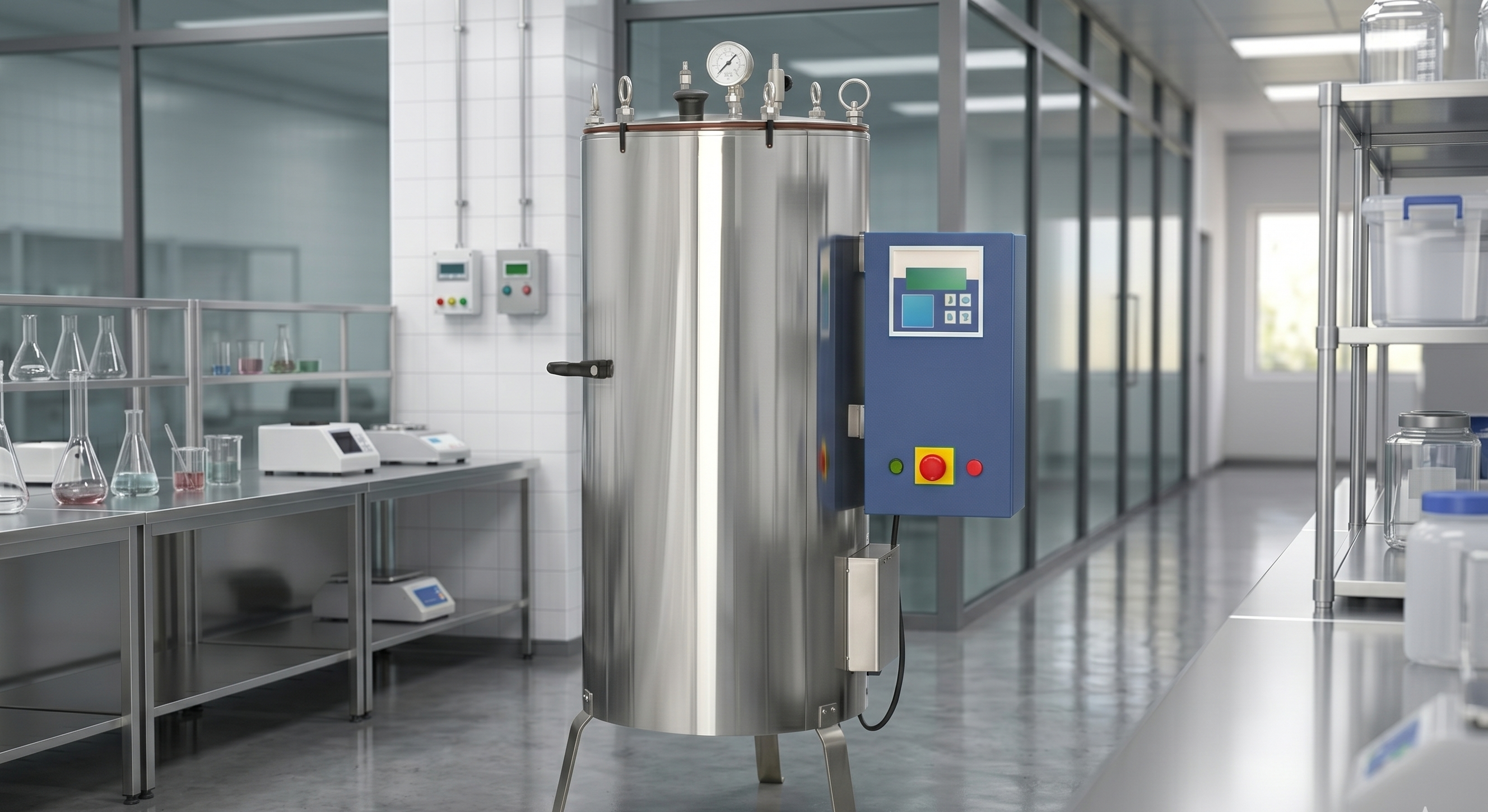
The vertical autoclave machine is the one which was manufactured based on the top-loading chamber principle. It operates through pressurized and heated steam for sterilization of medical objects such as surgical tools, laboratory dishes, contaminated cargoes, and other items.
The vertical design allows obtaining more advantages in regard to this type of autoclave machine due to saving space, so the vertical autoclaves are very common among laboratories, testing centers, hospitals, microbiological facilities, and other stations conducting researches in small spaces.
Eventually, once the steam pressure increases up to a required level, it is stabilized, and afterwards the steam enters the object under the action of moist heat for destruction of fungi, bacteria, spores, and other microorganisms.
Modern autoclaves usually include a set of mechanisms such as the electronic display, pressure indicator, timer, valve, and shut-off device. Nevertheless, although some companies prefer manual operation of this equipment because of its simple design, some others opt for programmed machines.
The process itself is simple in theory, but the actual performance depends heavily on chamber design and steam circulation quality.
Water inside the chamber starts heating until steam begins forming. As pressure builds, trapped air gradually escapes from the vessel. This stage matters more than many operators think because incomplete air removal affects steam penetration inside the chamber.
Once the machine reaches the required autoclave machine temperature and pressure level, the holding cycle starts. During this period, the chamber maintains steady steam exposure for a fixed duration depending on the material being sterilized.
Glassware behaves differently from liquid media. Wrapped surgical instruments require different exposure conditions compared to microbiological waste. That is why experienced operators rarely use identical cycle timing for every load.
In actual operation, uneven steam circulation creates most sterilization problems. Some buyers only discover this after months of usage when contamination issues begin appearing repeatedly despite correct cycle settings.
After the cycle finishes, steam pressure is released slowly through the exhaust system before the chamber can be opened safely.
Sterilization by wet heat entails the use of autoclaving by the application of moist heat, which destroys all microorganisms. steam sterilization guidelines Heat energy is more efficient in transmission than dry heat sterilization.
The temperatures used in most forms of sterilization are between 121°C and 15 psi pressure. However, there are some situations that may require sterilization at a temperature higher than others due to material and contamination levels.
Energy in the form of heat produced by water vapor becomes more effective during the condensation process, which results in the direct transmission of heat energy on the surfaces of objects. High energy levels destroy the protein structure of microorganisms, resulting in their death.
The autoclaving machines used in hospitals for sterilization purposes are mainly used in sterilizing hospital equipment, dressing, and biological waste. Cultures and other testing materials in research labs are sterilized in research laboratories.
One reason steam sterilization remains widely trusted is because the process does not leave chemical residue after treatment. That becomes important in laboratories where contamination-sensitive testing is performed regularly.
Vertical autoclaves are used in industries where contamination control directly affects operational quality and safety.
Hospitals and diagnostic centers rely on sterilization systems every day for infection control and reusable instrument processing. Smaller facilities usually prefer vertical systems because installation is easier and the machine fits comfortably into compact sterilization areas.
Microbiology laboratories use autoclaves constantly during routine testing work. Culture media, glassware, pipettes, contaminated samples, and laboratory waste all require proper sterilization before reuse or disposal.
Pharmaceutical laboratories often operate sterilization systems under stricter validation conditions. In those environments, stable temperature holding matters more than fast cycle completion because process consistency directly affects laboratory documentation and compliance.
Food testing laboratories, veterinary centers, biotechnology facilities, educational institutions, and industrial research departments also use steam sterilization systems for different operational requirements.
Many buyers compare only chamber capacity during the initial discussion. Actual operational concerns usually become visible later.
Temperature stability is one of the first things experienced lab operators ask about. Slight fluctuations inside the chamber may not look serious initially, but repeated inconsistencies eventually affect sterilization reliability.
Safety systems also deserve careful attention because the machine operates under pressurized steam conditions. Reliable systems normally include pressure release valves, low-water cut-off protection, over-temperature safety controls, and proper lid locking arrangements.
Automation level usually depends on how frequently the machine will be used. Small laboratories sometimes stay with manual systems for years because maintenance remains simple. Facilities handling continuous sterilization loads generally move toward semi-automatic or fully automatic systems with programmable controls.
Power consumption becomes part of the discussion later. Smaller labs may not notice immediately, but facilities running multiple cycles every day eventually start paying attention to insulation quality and heating efficiency.
After-sales support matters more than brochures usually suggest. Gaskets wear out. Valves need servicing. Heating elements eventually require inspection. Buyers dealing with poor service response often realize too late that technical support is just as important as the machine itself.
Sterilization depends on maintaining the right balance between steam pressure, temperature, and exposure duration.
While it is true that there are sterilizing methods that rely on pressure measurements, it is also essential to remember that relying on pressure alone will not ensure sterilization. All pressure does is ensure the elevation of temperature beyond boiling.
Normal processes are done at 121°C with pressure at 15 psi. Certain sterilizations will need very high temperatures.
Cycle timing also changes according to material type. Liquids, wrapped instruments, and microbiological waste rarely behave the same way inside the chamber.
Facilities handling sensitive laboratory work usually prefer digital monitoring systems because manual operation increases the chances of cycle variation over time.
Chamber quality affects machine lifespan far more than many first-time buyers expect.
Continuous exposure to steam and pressure eventually damages lower-grade materials. That is why most industrial buyers prefer stainless steel construction for long-term operation.
SS 304 stainless steel is commonly used in hospital and laboratory applications. Pharmaceutical facilities or corrosive environments often prefer SS 316 because it provides better resistance against long-term moisture exposure.
Insulation quality also changes overall performance. Poor insulation increases heat loss and gradually raises electricity consumption during continuous operation.
Experienced operators usually inspect welding quality, chamber finishing, and lid construction carefully before purchasing because structural weaknesses often appear only after months of repeated use.
|
Specification Parameter |
Typical Configuration |
|
Chamber Capacity |
22 Liters to 150 Liters |
|
Temperature Range |
121°C to 134°C |
|
Pressure Range |
15 psi to 32 psi |
|
Chamber Material |
SS 304 / SS 316 Stainless Steel |
|
Automation Type |
Manual, Semi-Automatic, Fully Automatic |
|
Heating System |
Electrical Heating |
|
Safety System |
Pressure Valve, Low Water Protection, Lid Lock |
|
Power Consumption |
Depends on chamber capacity |
The difference between vertical and horizontal systems mostly comes down to installation space and sterilization volume.
Vertical autoclave machines use top-loading chambers and usually fit better inside compact laboratories or smaller sterilization rooms.
It is always done with regard to simplicity in installation.
The horizontal model should ideally be employed in scenarios where there are large loads that require batch processing.
The vertical model is considered easier to maintain due to easy accessibility to all components, including the heating units.
The horizontal model requires a higher capital investment during installation.
For routine laboratory sterilization work, vertical systems usually provide enough capacity without creating unnecessary operational complexity.
The price of a vertical autoclave machine in India depends on much more than chamber size alone.
Another important element that affects prices includes the material used in the manufacture of the machinery. Machinery that makes use of high-quality stainless steel is usually expensive because of its strength and durability against corrosion.
The fact that the machinery is automated will affect the price of acquiring it.
However, it must be noted that the requirement of customized chamber machinery may exist within some industries.
Those individuals who buy machinery for cheap reasons normally end up experiencing malfunctions or steam leaks within the machine.
This point reaches a level where reliability outweighs costliness in laboratory equipment.
Bionicsro focuses on building sterilization systems designed for actual laboratory and industrial working conditions rather than simply offering standard equipment configurations.
The company realizes that consistency is a critical requirement in sterilization processes that require repetitive performance each day.
Bionicsro autoclaves are built robustly to provide maximum durability and safety as well as efficiency in the generation of steam. The company’s autoclaves are simple to operate as well.
Besides, Bionicsro provides technical assistance to its customers at the time of installation.
Conclusion
A vertical autoclave machine supports far more than basic sterilization. In hospitals, laboratories, and pharmaceutical environments, it directly affects contamination control, workflow stability, operational safety, and testing reliability.
The consumers of sterilizers need to focus on the performance characteristics of the sterilizers rather than concentrating solely on the specifications.
The reason behind it is that apart from the specifications, there are numerous other variables that influence the functioning of sterilizers, such as chamber construction, steam generation, temperature control, and security systems. If sterilization is done daily, caution must be exercised in choosing the sterilizer.
The choice of sterilization machines does not only depend on the verification of the machine’s specification alone.
Bionicsro helps our customers in making decisions on choosing the suitable vertical autoclave machine depending on their needs. Whether for microbiology testing, pharmaceutical testing in the lab, sterilization in the hospital, or research, Bionicsro will help you choose the right sterilization machine.
In case you require any help in choosing the right sterilization machine or in establishing your lab, do not hesitate to contact us at Bionicsro.
They require less installation space and are easier to manage for routine sterilization work.
Sterilization generally happens at 121°C with specific steam pressure.
Autoclave machines are usually used in hospitals, pharmaceutical laboratories, microbiology laboratories, research laboratories, and biotechnology firms.
Yes, poor steam penetration affects sterilization of specific load parts.
The stainless steel chamber can resist frequent high temperature and humidity better than other metals.
There are several factors that affect the costs of autoclave machines in India.


Connect with us for your business enquiries. Generally, we respond within a day.