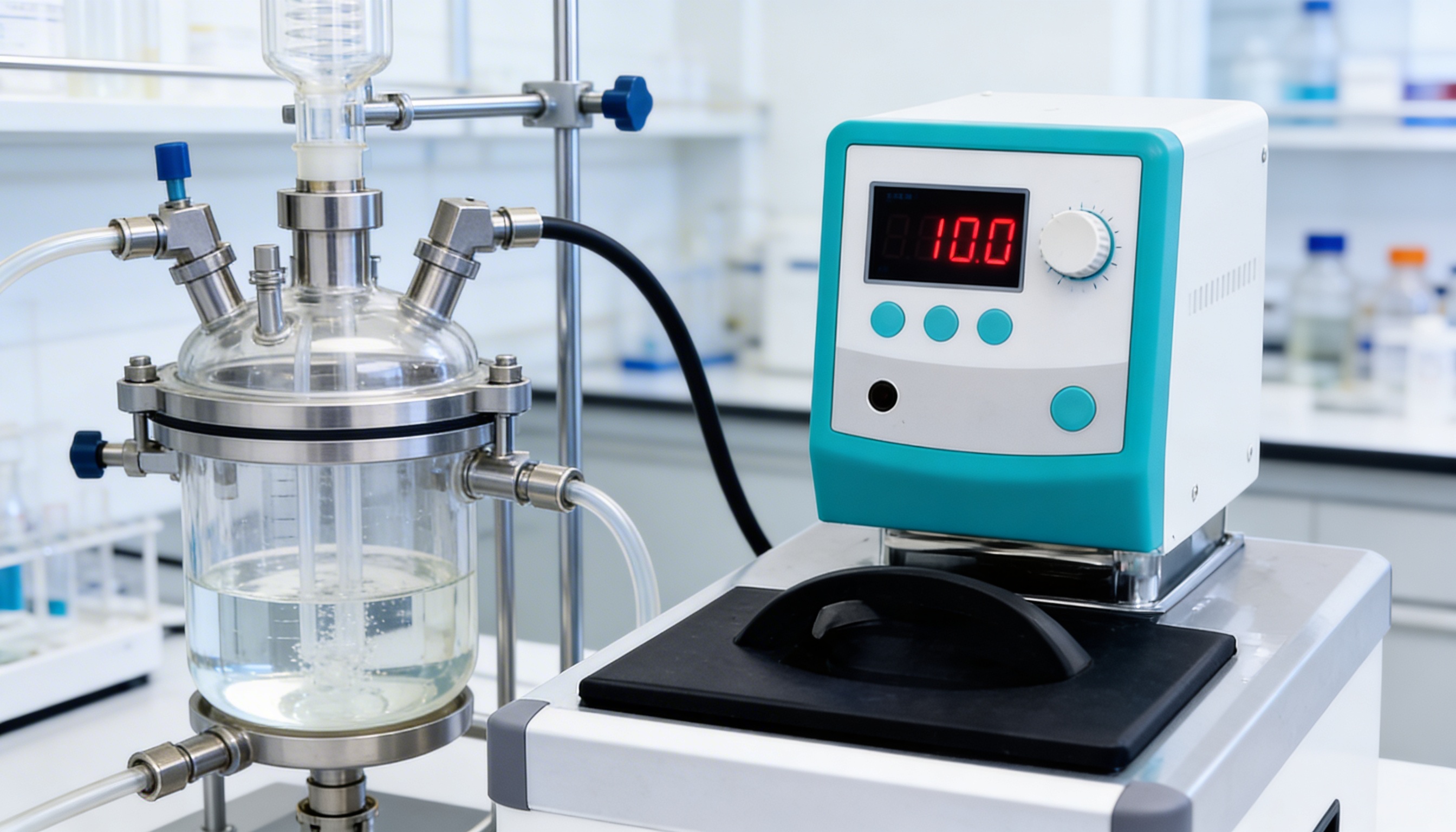
Various medical industries and units, like diagnostic centers, pharma units, and related facilities, make wide usage of one product—laboratory circulators. This highly important yet often overlooked product is used to control the temperature. Maintaining accurate thermal conditions is essential in various chemical and manufacturing units. Temperature control takes place via laboratory circulators.
Lab Circulators are designed to regulate, maintain, and distribute fluids to external equipment or internal systems. These fluids are temperature controlled and pass through laboratory equipment. They are often neglected and not paid much attention to. They work silently in the background but are vital to various applications.
A Laboratory Circulator is a simple device that is used to heat and cool fluids. After controlling the temperature, the fluid circulates through equipment, including reactors, condensers, water baths, etc. The aim is simple—to maintain a consistent temperature over time.
In labs where even a minor shift in temperature can affect the results, a laboratory circulator becomes important.
In laboratories, maintaining temperature becomes important. Any false data can highly impact chemical operations like chemical reactions. Experts rely heavily on medical laboratory calculators for getting correct results.
Based on configurations, a Laboratory Circulator is divided into various types. Let us have a look:
As the name suggests, heating calculators are specially designed to maintain high fluid temperatures. They are used in various evaporation and sample conditioning processes.
Cooling circulators are designed to maintain low fluid temperatures. They are used in material testing processes.
These dual-functioning circulators offer flexibility to many experiments and testing processes.
Immersion circulators are used to control temperatures in tanks and baths. They are used in swimming pools.
Laboratory circulators are widely used in various medical industries. Some of them are as follows:
| Application Area | Recommended Circulator Type | Temperature Range | Key Benefit |
|---|---|---|---|
| Medical diagnostics | Heating circulator | Ambient to +100°C | Stable sample incubation |
| Pharmaceutical R&D | Heating & cooling circulator | -20°C to +200°C | Flexible temperature control |
| Chemical reactions | Cooling circulator | Below ambient | Reaction stability |
| Quality testing labs | Immersion circulator | Custom | Cost-effective versatility |
| Research institutions | High-precision circulator | Wide range | Consistent reproducibility |
This is a quick comparison table for you.
Some of the important parameters that define how effective a high-quality circulator is depend on a large number of factors. Some of them are: temperature control, Type of digital controller, Safety features, Construction type (water resistant or not)
This time we live in is ruled by digital tools. They enhance the accuracy of a system in a more effective way when compared to the traditional methods. Often, handlers and operators use laboratory calculator apps to check the concentration levels and thermal shifts during experiments. Even the most advanced apps rely on laboratory operators for functioning, making them an irreplaceable part of labs.
As already established, a laboratory circulator maintains constant temperatures. Let us see how it helps:
A Medical Laboratory Circulator helps the researchers to authenticate the results.
The latest laboratory circulators are used for the following:
Today’s laboratory circulators are designed in a way to merge smoothly with the modern laboratory setups. Many calculators that are bought after searching for a Lab Calculator online can easily be integrated with the latest lab setups, resulting in higher operational efficiency.
These simple steps will help you maintain the product for a long time.
Even though the laboratory circulators are not the hero in a lab, they have a great impact on the experimental efficiency. They are used in a wide number of industrial applications, including industrial research processes and medical sectors. Always keep in mind that all the industrial and medical experiments should be conducted under stable conditions. If you are looking forward to buying the best-in-class laboratory circulators, let Bionics Consortium take care of your procurement needs. The platform has been serving many medical, pharmaceutical, and research facilities with high-quality lab equipment for more than 25 years.
Contact Us today for more details.
A laboratory circulator maintains and circulates temperature-controlled fluids to ensure consistent thermal conditions during experiments.
Circulators offer higher temperature precision, external fluid circulation, and better control compared to basic water baths.
Yes, they are widely used in medical laboratories for diagnostics, incubation, and sample preparation.
High-quality circulators are designed for long-duration operation with proper maintenance.
Stable temperature control ensures that calculations performed using a Medical Laboratory Calculator reflect true experimental conditions.


Connect with us for your business enquiries. Generally, we respond within a day.