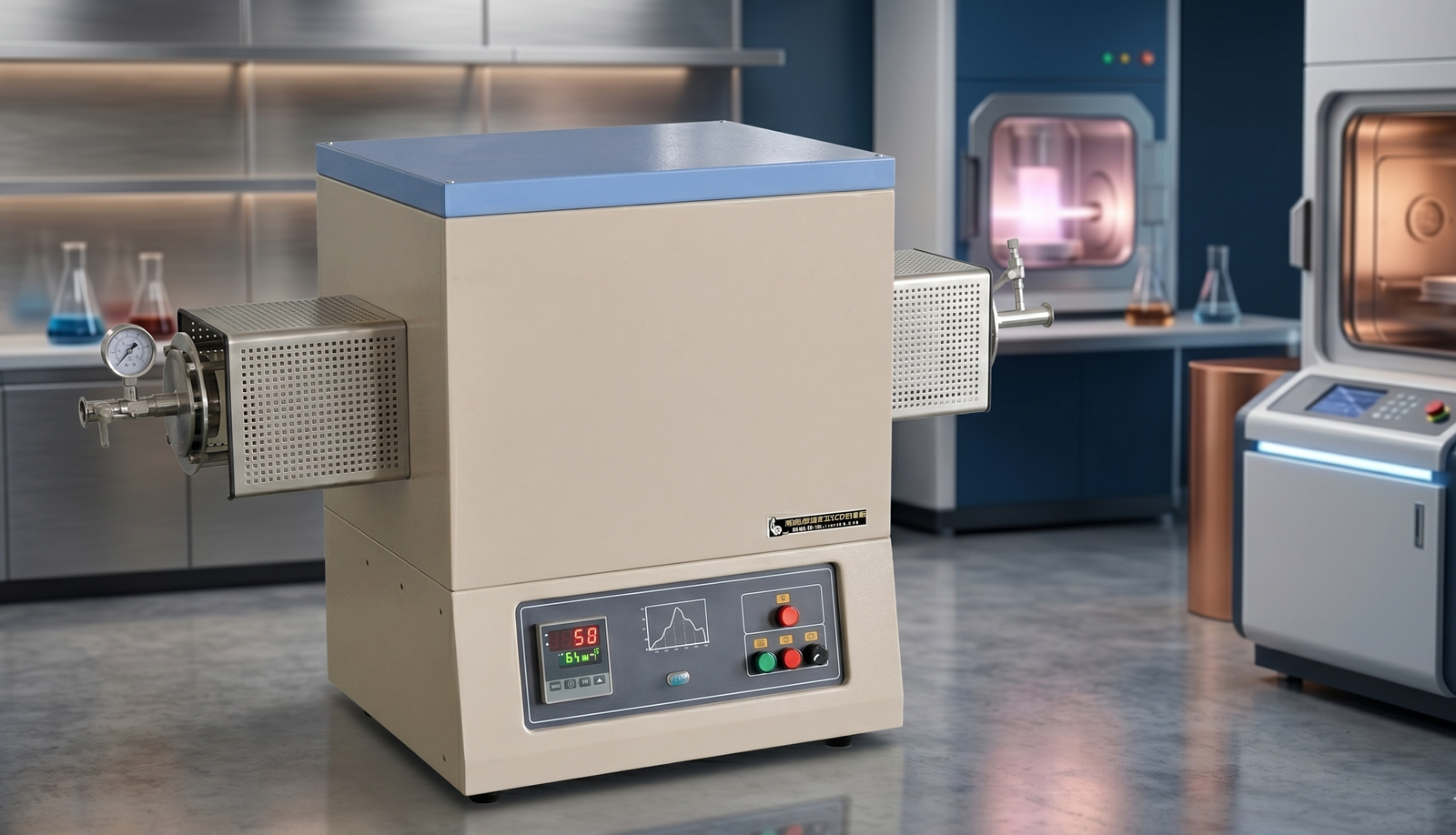
In many labs, the challenge is not heating the material. The major issue is to maintain the same thermal conditions throughout the operation without undesirable temperature variations, contamination or oxidation. That's when a Tube Furnace comes in handy.
Unlike conventional heating equipment, the tube furnace permits the processing of materials in a closed tube chamber with improved control of temperature and environment. This configuration is often the choice in research settings where the behavior of the material is sensitive to the minor variations in the heating conditions.
Tube furnaces are widely employed in metallurgy laboratories, ceramic processing units, semiconductor research institutes, universities, pharmaceutical laboratories and material testing centers. In these situations, steady heating is often more crucial than simply getting hot.
Bionicsro offers tube furnace systems for laboratory and industrial users who need stable thermal performance for research, testing and manufacturing. Some customers need compact systems for normal laboratory work, and others require the bigger furnace setups for continuous industrial operation. In all cases, the emphasis is on consistent heating, dependable control and long-term usability.
The basic working process is relatively straightforward. The tube chamber is surrounded by heating devices which generate heat which is transferred uniformly to the sample inside the tube.
What makes the system useful is the level of control it offers during the heating cycle.
The operator can manage the temperature rise, the holding period, the cooling phases and in many cases the atmosphere inside the tube as well. Depending on the application, the process can be carried out in air, nitrogen, argon, hydrogen or vacuum conditions.
For example, in metallurgy laboratories during the research of heat treatment, oxidation might influence the surface qualities of the sample. The use of a controlled environment in a laboratory tube furnace alleviates that problem.
In semiconductor research, vacuum tube furnace systems are typically utilized in situations where contamination control is a vital factor in wafer processing or in thin-film investigations.
Additionally, researchers dealing with nanomaterials or catalyst development like tube furnaces since the sealed chamber offers a cleaner and more stable processing environment compared to open heating systems.
A typical error customers make is focusing just on the greatest temperature a furnace can achieve.
In practice, it is frequently far more important that the operating temperature be consistent.
A sudden change of the heating profile throughout a long process cycle can influence material structure, testing or manufacturing quality. Hence the importance of insulation quality , controller precision and thermal uniformity as aspects of furnace performance.
The Bionicsro tube furnace systems are developed for long heating periods to provide stable operational condition. Depending on the process requirements the furnace can be supplied with quartz tubes, ceramic tubes or high temperature refractory chambers.
Our programmable tube furnace models are fitted with PID controls which allow operators to develop regulated heating profiles tailored to the application. This is especially valuable in research situations where the heating rate and soak duration directly influence experimental outcomes.
Multi-zone heating options are also available for applications demanding higher thermal uniformity on longer samples.
The temperature range of the tube furnace depends on its design and the purpose for which it is intended. Some laboratory set-ups are at medium temperatures for testing operations. High temperature tube furnace models created for sophisticated ceramic or material processing applications may go over 1600°C.
|
Furnace Type |
Common Use |
Advantage |
|
Horizontal Tube Furnace |
Material testing and laboratory heating |
Better sample positioning and steady gas flow |
|
Vacuum Tube Furnace |
Semiconductor and oxygen-sensitive processes |
Reduced contamination during heating |
|
Split Tube Furnace |
Research labs with frequent sample changes |
Easier maintenance and tube handling |
|
High Temperature Tube Furnace |
Ceramic and advanced material processing |
Suitable for extreme temperature operation |
Horizontal Tube Furnace
The horizontal tube furnace is among the most often utilized due to the facility of sample positioning and the constant flow of gas through the heating chamber. These systems are often found in research laboratories, catalyst development facilities and in thermal processing applications using calcination or oxidation investigations.
For processes that cannot be exposed to oxygen during heating, a vacuum tube furnace is usually utilized. These systems are widely used in laboratories of semiconductors, nanotechnology and advanced metallurgy applications.
Split Tube Furnace
Split tube furnaces are excellent for labs where the operators often switch the samples or replace the tubes. The furnace body is easily opened to facilitate maintenance under normal operation.
The high temperature tube furnace has been developed for use with advanced ceramics, refractory materials, powder processing and specialized thermal research demanding extreme operating temperatures.
Tube furnaces are used across a wide range of research and industrial applications.
Universities and research institutions typically use these systems during material science studies, nanotechnology experiments and thermal analysis activities.
In the material testing laboratories tube furnaces are used to analyze the behavior of structures under controlled heating.
Industrial tube furnace systems are widely utilized in metallurgy sectors for heat treatment, stress alleviation, oxidation investigations and alloy development.
Sintering techniques in the fabrication of ceramics require controlled heating at high temperature where product uniformity is critical and thermal stability is of importance.
Semiconductor facilities utilize electric tube furnace systems for diffusion investigations, wafer treatment and controlled environment processing.
Tube furnaces are also used in chemical laboratories for catalyst activation, pyrolysis and reaction investigations in which the uniformity of heating affects the dependability of the process.
Choosing the correct furnace is generally process based rather than just picking the highest spec available.
One factor is the needed operating temperature but environment control, length of heating zone, tube diameter, and controller capability are also significant.
A small research laboratory may only need a compact furnace for occasional testing work. But an industrial production plant may require a larger system, built to run continuously over extended heating cycles.
Vacuum compatibility or regulated gas flow arrangements may also be required for applications involving delicate materials.
It is crucial in these instances to work with an experienced tube furnace maker, as the correct layout is strongly dependent on the actual use of the furnace.
|
Parameter |
Specification |
|
Temperature Range |
Up to 1700°C |
|
Heating Type |
Electric Heating |
|
Controller |
PID Programmable Controller |
|
Tube Material |
Quartz / Ceramic |
|
Heating Zones |
Single / Multi Zone |
|
Atmosphere |
Air / Vacuum / Inert Gas |
|
Furnace Type |
Horizontal / Split / Vacuum |
|
Insulation |
Ceramic Fiber |
|
Voltage |
220V / 415V |
|
Applications |
Research, Metallurgy, Ceramics, Semiconductor |
We provide laboratories, universities, pharmaceutical firms, research centers and industrial users with practical and reliable thermal processing equipment.
We are not about creating needless complications. Most clients ask for reliable performance, ease of operation and reliable temperature regulation in real working situations.
We are one of the growing tube furnace manufacturers in India.
We provide customisation choices as per the demand of the process, operating temperature, chamber dimensions and atmosphere control requirements.
Our staff also works with customers during equipment selection to ensure that the furnace configuration suits the particular application, not just a conventional catalog specification.
Whether you need a small laboratory tube furnace or a larger industrial tube furnace for production work, we assist our customers in finding systems that will meet their operational requirements.
The cost of a tube furnace is usually determined by the operating temperature, length of the heating zone, size of the tube, type of insulation, configuration of the controller and needs for atmospheric management.
Industrial models for continuous or high temperature operation are usually different from the laboratory models for normal testing.
Processes utilizing vacuum systems, multi-zone heating or specific temperature programming may necessitate unique furnace setups.
This is why many industrial purchasers prefer to discuss their application needs before choosing a furnace model. This ensures that the equipment is suited not only to the present task but also to the operational requirements of the future.
For technical details, pricing, or customized furnace solutions, you can contact Bionicsro with your application requirements.
Conclusion
Tube furnaces are commonly used in research and industrial environments where stable heating conditions are important for consistent results.
From metallurgy and ceramics to semiconductor research and material testing, these systems enable processes where temperature constancy is directly related to performance and accuracy.
At Bionicsro we offer laboratory and industrial tube furnace systems for practical operational needs. We will work with you to select the correct furnace configuration for your application if you are installing new thermal processing installations or upgrading existing equipment.
Tube furnaces are used for controlled heating applications, such as annealing, calcination, sintering, material testing, thermal analysis and semiconductor manufacturing.
Controlled atmospheres prevent oxidation and contamination during heating, especially with sensitive materials or when used in research grade applications.
High temperature tube furnace systems can be operated above 1600°C depending on the architecture of the furnace and the heating elements.
A muffle furnace is a general purpose furnace with an open chamber for heating activities. A tube furnace is a closed tubular chamber good for atmospheric controlled heating.
Yes. Tube furnaces can be modified for operating temperature, tube size, length of heating zone, kind of controller and atmosphere control needs.


Connect with us for your business enquiries. Generally, we respond within a day.