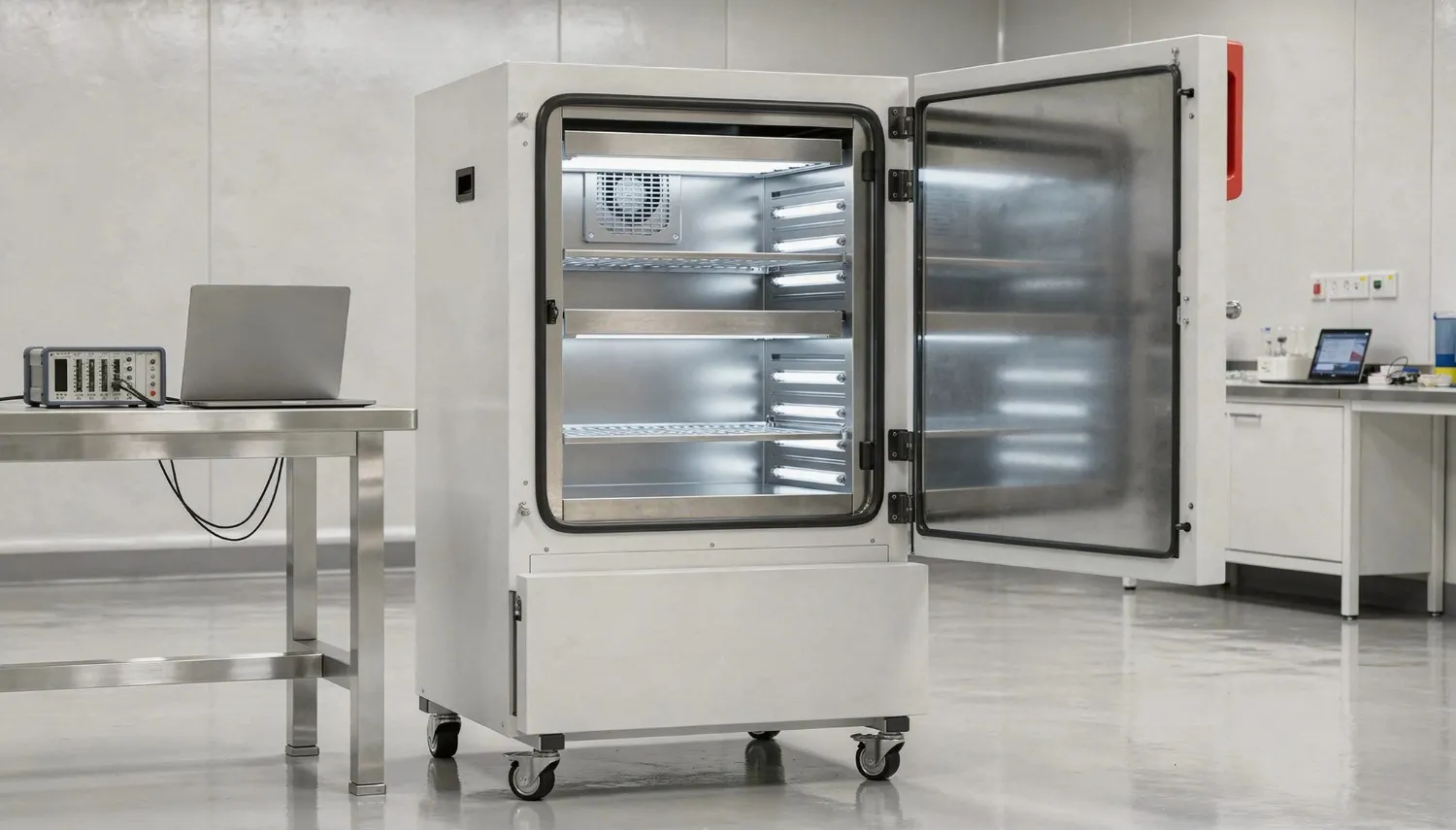
Photostability testing is a very important aspect in the pharmaceutical, cosmetic, and food processing industries, where the integration of products in the light environment should be maintained. To check how products react over time in controlled light conditions, photostability test chambers are designed.
A photostability test chamber is a special piece of laboratory equipment that is used to determine the impact of light exposure on the product. Also, it meets the international guidelines to check the testing conditions. These chambers make the manufacturer use UV and visible light to understand the shelf life of the product, packaging, and even stability in real-life situations.
In photostability testing, accuracy is important because testing minor changes in light intensity, temperature, or exposure duration can easily affect the result. Wrong testing can lead to:
The use of proper equipment and methods ensures optimal performance.
'Bionics Consortium is a company that deals with the provision of high-quality environmental photostability testing chambers and laboratory equipment. As a company that highly values innovation and accuracy, Bionics develops and produces sophisticated testing systems serving numerous industries, including pharmaceuticals, electronics, and research laboratories. We have been providing this service to industries for more than 25 years with ISO certification. The company has a diverse product line that includes photostability testing chambers, plant growth chambers, environmental chambers, Laboratory Chambers, humidity chambers, and laboratory indicators, among other related products. All the products are designed to provide accurate, reliable, and consistent performance to ensure that clients obtain optimal testing performance. The customer-oriented strategy and emphasis on quality have made Bionics Consortium remain a reliable partner to the companies that want reliable and efficient laboratory solutions.'
The foundation of accurate testing in the right chambers is important. Also, you need to evaluate the Photostability Chamber Price so that you are able to adjust your budget with your requirements. High-quality chambers always provide consistent light distribution and stable temperature control with reliable performance.
A clear understanding of Photostability Chamber Specifications ensures you use the equipment effectively. Important parameters include:
Using a chamber without understanding these features can affect the results.
Here is the photostability chamber specification in table form.
| Parameter | Ideal Range/Feature | Importance |
|---|---|---|
| UV Light Intensity | ≥ 1.2 million lux hours | Ensures adequate exposure |
| Visible Light Intensity | ≥ 200 watt-hours/m² | Simulates real conditions |
| Temperature Range | 20°C to 40°C | Prevents thermal interference |
| Humidity Control | Optional but beneficial | Adds environmental accuracy |
| Airflow System | Uniform circulation | Avoids hotspots |
| Control System | Digital programmable | Enhances repeatability |
Trivia
Photostability chambers can run tests continuously for days or even weeks!
Must follow the ICH guidelines, which are globally accepted. This maintains the risk level and test condition in all industries. If you skip these guidelines during the audits and approval, the result will be rejection.
Sample positioning inside the chamber significantly affects results. Uneven placement may cause inconsistent exposure.
Best practices include:
This confirms equal exposure to both UV and visible light.
To maintain accuracy, routine calibration is very important because over time sensors and light may affect the accuracy without the maintenance. The reliable and trusted Photostability Test Chamber Manufacturers always confirm the proper servicing and calibration support and help to maintain the better performance.
When the light exposure is the primary factor, temperature and humidity can influence results. Make sure that
Stable conditions lead to reproducible outcomes.
Trivia
Photostability testing helps ensure that what you buy looks and works the same until its expiry date.
Accurate data logging is important for validation and compliance. Modern chambers come with digital interfaces that record:
Scan this data carefully to draw meaningful conclusions.
Errors by experienced users can still impact accuracy. Avoid these common mistakes
To achieve reliable results, choosing the trusted and reliable supplier is very important. When exploring options, consider reputed Photostability Test Chamber Suppliers in India who offer:
A dependable supplier ensures long-term reliability with compliance.
For investors, it is always important to evaluate the Photostability Chamber Price. Maintaining the balance between cost and quality is also very important. In a cheaper option, the industry may need to compromise on features like light consistency or the control system.
Instead, focus on:
This makes sure of a better return on investment over time.
Trivia
Sunscreen products are tested in photostability chambers to ensure they remain effective.
Modern photostability chambers come with advanced features that enhance accuracy:
These Photostability Chamber Specifications help you fully utilise the equipment.
Here are some related blogs you might be interested in:
10-Point Maintenance Checklist for High-Performance Laboratory Equipment
Working with experienced Photostability Test Chamber Manufacturers ensures you receive equipment that meets global standards. Established manufacturers focus on:
This ultimately improves the reliability of your testing process.
The market is expanding very fast in regard to the demand of suppliers of photostability test chambers in India. Quality testing is now becoming important for any industry to satisfy international standards. It has resulted in the introduction of sophisticated chambers that provide uniform and accurate results in different applications.
Trivia
Temperature control is important because heat can influence light-induced reactions.
To achieve accuracy in results, the industry requires photostability test chambers with the right equipment and proper usage that meet international standards. Understanding specifications for the maintenance of calibration, each of the processes is very important in determining accurate results.
If you are looking for plant growth chambers, mortuary chambers, seed germinators, sand and dust chambers, and other related equipment, contact us now.
A photostability test chamber is used to evaluate how products react when exposed to light over time. It helps determine stability, shelf life, and packaging suitability. These chambers simulate controlled UV and visible light conditions based on global standards like ICH guidelines. Industries such as pharmaceuticals, cosmetics, and food processing rely on this testing to ensure product safety, quality, and compliance before launching products into the market.
Choosing the right photostability test chamber involves evaluating factors like build quality, light intensity control, temperature stability, and compliance with standards. It is important to compare features instead of focusing only on cost. Understanding photostability chamber specifications helps in selecting equipment that meets your testing requirements. Also, consider after-sales support, calibration services, and reliability when choosing a manufacturer or supplier.
Calibration ensures that the chamber delivers accurate and consistent light intensity, temperature, and environmental conditions. Over time, sensors and lighting systems may drift, leading to incorrect results. Regular calibration helps maintain precision and compliance with regulatory standards. It also ensures that your test data remains reliable and reproducible, which is essential for audits, approvals, and maintaining the overall quality of your testing process.
Photostability test chambers are widely used in industries where product stability is critical. These include pharmaceuticals, cosmetics, food and beverages, and chemical industries. They help manufacturers understand how light exposure affects product quality and safety. By conducting these tests, companies can ensure compliance with international regulations, improve product formulations, and avoid risks such as degradation, discoloration, or reduced effectiveness during storage and usage.
Light intensity plays a crucial role in determining the accuracy of photostability testing. If the intensity is too low or inconsistent, the results may not reflect real-world conditions. Properly controlled light exposure ensures reliable data on product degradation. This is why understanding photostability chamber specifications is essential, as it helps maintain uniform exposure and ensures that the test results are both accurate and reproducible.
Yes, there are many reliable Photostability Test Chamber Suppliers in India that offer high-quality and compliant equipment. When choosing a supplier, look for certifications, industry experience, and customer support services. A good supplier provides installation, calibration, and maintenance support to ensure long-term performance. Partnering with a trusted supplier helps improve testing accuracy, ensures regulatory compliance, and provides peace of mind for your laboratory operations.


Connect with us for your business enquiries. Generally, we respond within a day.