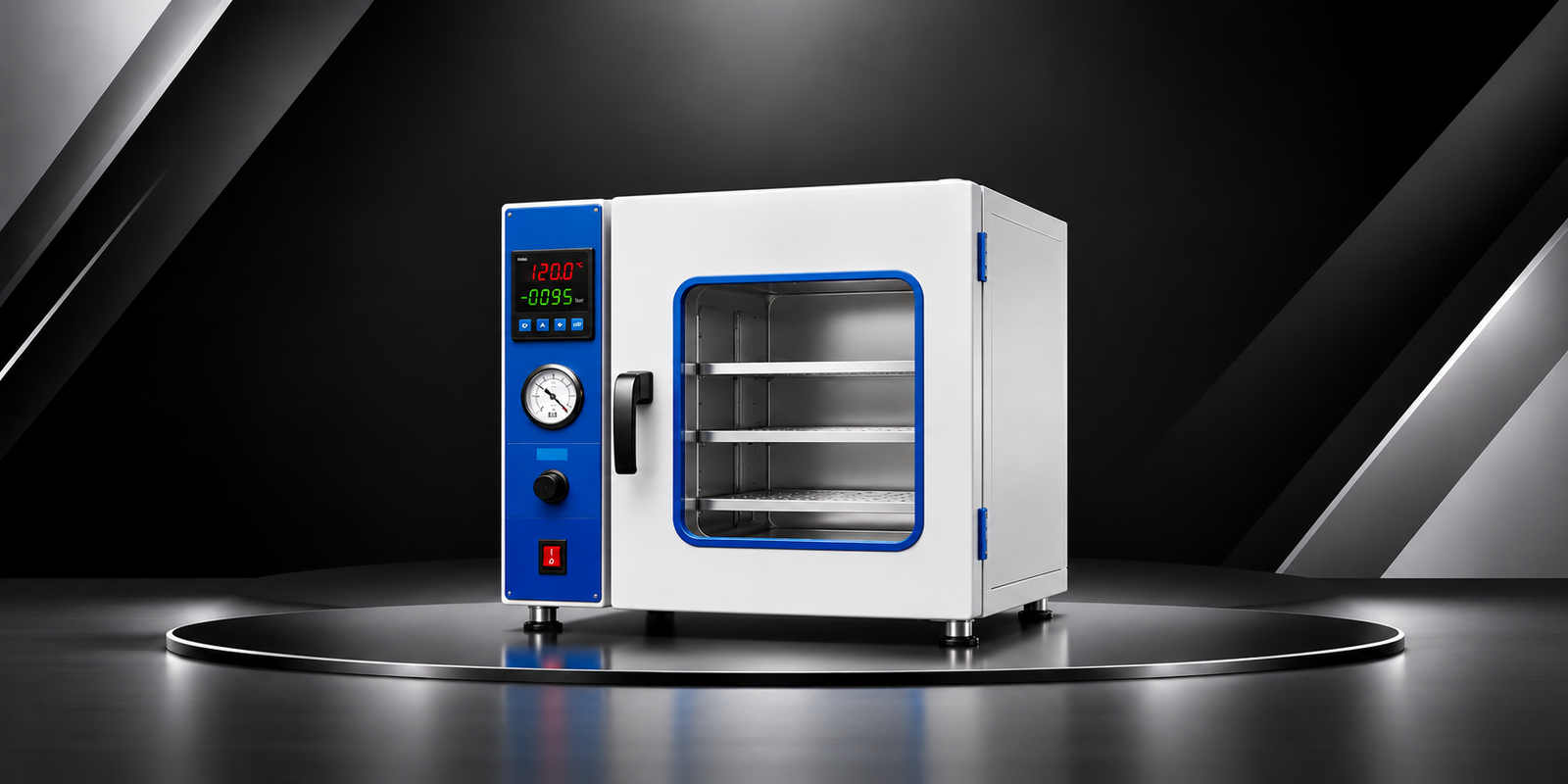
Choosing the right vacuum oven manufacturer matters most when your samples can't take much heat. Pharma powders, electronic parts, polymers and solvent-wet residues tend to break down, oxidise or change colour at the temperatures an ordinary oven needs to drive off moisture. A vacuum oven gets around the problem. It pulls the air out of the chamber first, so water and solvents leave the sample at a much lower temperature.
This guide covers how the equipment works, what to look for on a specification sheet, what moves the price, and how to judge a vacuum oven manufacturer or supplier before you commit. It comes from Bionics Consortium, a laboratory equipment manufacturer with 26 years of manufacturing experience.
A vacuum oven is a sealed, heated chamber connected to a vacuum pump. Once the pressure inside drops, moisture and solvents evaporate at a lower temperature than they would in a hot air oven. That makes it the sensible choice for heat-sensitive, oxidation-prone or stubborn-to-dry material.
Liquids boil at lower temperatures when the pressure around them falls, and the vapour pressure of water shows this clearly. A vacuum oven puts that behaviour to work.
Most laboratory units share the same basic parts:
In practice you load the trays, close the door, start the pump and set the temperature. Vapour is drawn away as it forms, and the sample dries without sitting in high heat or in contact with oxygen.
You'll find them anywhere gentle, thorough drying counts:
|
Point of comparison |
Vacuum oven |
Hot air oven |
|
How it dries |
Low pressure plus heat |
Circulating heated air |
|
Working temperature |
Lower for the same result |
Higher |
|
Heat-sensitive samples |
Suitable |
Risk of damage |
|
Oxidation |
Minimal, air is removed |
More likely |
|
Solvent removal |
Efficient |
Slower and harder to control |
|
Extra equipment |
Needs a vacuum pump |
None |
|
Best for |
Delicate or high-value samples |
General drying and baking |
If your material copes with heat and you just need ordinary drying, a hot air oven will do the job. If it doesn't, go with a vacuum oven. The wider laboratory oven range is a useful place to compare the two.
Figures differ from one model to the next, so confirm them against the datasheet or your quotation. The Bionics Consortium vacuum ovens are built around the following:
|
Feature |
What you get |
|
Build |
Stainless steel or powder-coated construction |
|
Heating |
High-efficiency elements with a system for even temperature distribution |
|
Controller |
Digital PID controller with a display |
|
Vacuum |
Gauge and vacuum port connection |
|
Door seal |
Heat-resistant silicone gasket |
|
Loading |
Adjustable shelves |
|
Insulation |
Fitted for temperature stability |
|
Energy |
Low power consumption |
|
Size |
Several chamber capacities |
When quotations arrive, put the same questions to every supplier:
|
Parameter |
Why it matters |
What to ask |
|
Chamber capacity |
Sets your batch size |
Volume and number of shelves |
|
Temperature range |
Must suit your drying protocol |
Minimum and maximum working temperature |
|
Temperature uniformity |
Trays should dry evenly |
Uniformity data and how it's measured |
|
Achievable vacuum |
Affects how fast solvents come off |
Vacuum level and gauge type |
|
Door seal |
Decides how long the vacuum holds |
Gasket material and spare availability |
|
Pump |
Influences performance and upkeep |
Included or not, and which type |
|
Paperwork |
Audited labs need it |
Manual and test records supplied |
Comparing prices takes five minutes. Comparing quality takes more effort, and these are the points that tell a dependable vacuum oven supplier from a risky one.
The seal. An oven that can't hold vacuum is just a slow oven. Ask how each unit is tested before it leaves the factory. Bionics Consortium says its vacuum ovens go through inspection, performance testing and vacuum integrity checks before shipping.
Heat distribution. A high maximum temperature tells you little if one corner of the chamber runs cooler than another. For repeatable results, uniformity is the number to chase.
Questions before the quote. A good manufacturer will want to know your samples, solvents and drying temperatures. A supplier who quotes without asking anything hasn't understood your job yet.
Installation and training. Ask whether setup help, a user manual and operator guidance come with the oven.
Spares and service. Gaskets, gauges and controllers wear out eventually. Check that they're available and that someone answers when you call.
Warranty and records. Regulated labs need manuals, test records and a clear warranty, so find out exactly what's covered and for how long.
There's no single vacuum oven price, because quotations shift with a handful of choices:
The cleanest way to get a fair comparison is to send each supplier the same capacity, temperature and vacuum requirements and ask for a written quotation. Otherwise you end up comparing headline prices for machines built to different standards.
If you're about to buy a vacuum oven in India, a simple sequence saves time:
You can look over the range on the Bionics Consortium vacuum oven and send your requirements for a recommendation.
Most problems with these ovens come from handling rather than from the machine. A few habits help:
Want a vacuum oven manufacturer who'll talk through your application before quoting? Tell us your sample type, temperature range, capacity and vacuum requirements, and we'll recommend a suitable model.
Request a quotation: Contact Us
A vacuum oven earns its place when your samples are too delicate for ordinary drying. The right model comes from matching chamber size, temperature performance, vacuum capability and support to your real work, and the lowest quotation rarely does that.
Pick a vacuum oven manufacturer that asks about your application, is straight about its specifications and stays around after delivery. With 26 years of manufacturing experience, Bionics Consortium is ready to help you decide.
It dries or heats samples under reduced pressure. Typical uses are heat-sensitive materials, solvent removal and oxygen-sensitive samples.
A normal oven heats air at atmospheric pressure. A vacuum oven removes the air first, so samples dry at lower temperatures with less oxidation.
Yes, a pump is needed. Check your quotation to see whether it's included or sold separately.
Chamber size, construction, controller, pump type, accessories and support all play a part.
Bionics Consortium offers several chamber capacities. Share your batch size and the team will suggest a suitable model.
A digital PID temperature controller with a display.
The door has a heat-resistant silicone gasket, and the oven includes a vacuum gauge and vacuum port connection.
Look for in-house manufacturing, leak testing, clear datasheets, available spares, proper documentation and responsive technical support.
Inspect it regularly and replace it once it looks worn, cracked or stops holding vacuum. How often depends on how heavily the oven is used.
Bionics Consortium provides installation support, a user manual, technical assistance and warranty cover.


Connect with us for your business enquiries. Generally, we respond within a day.