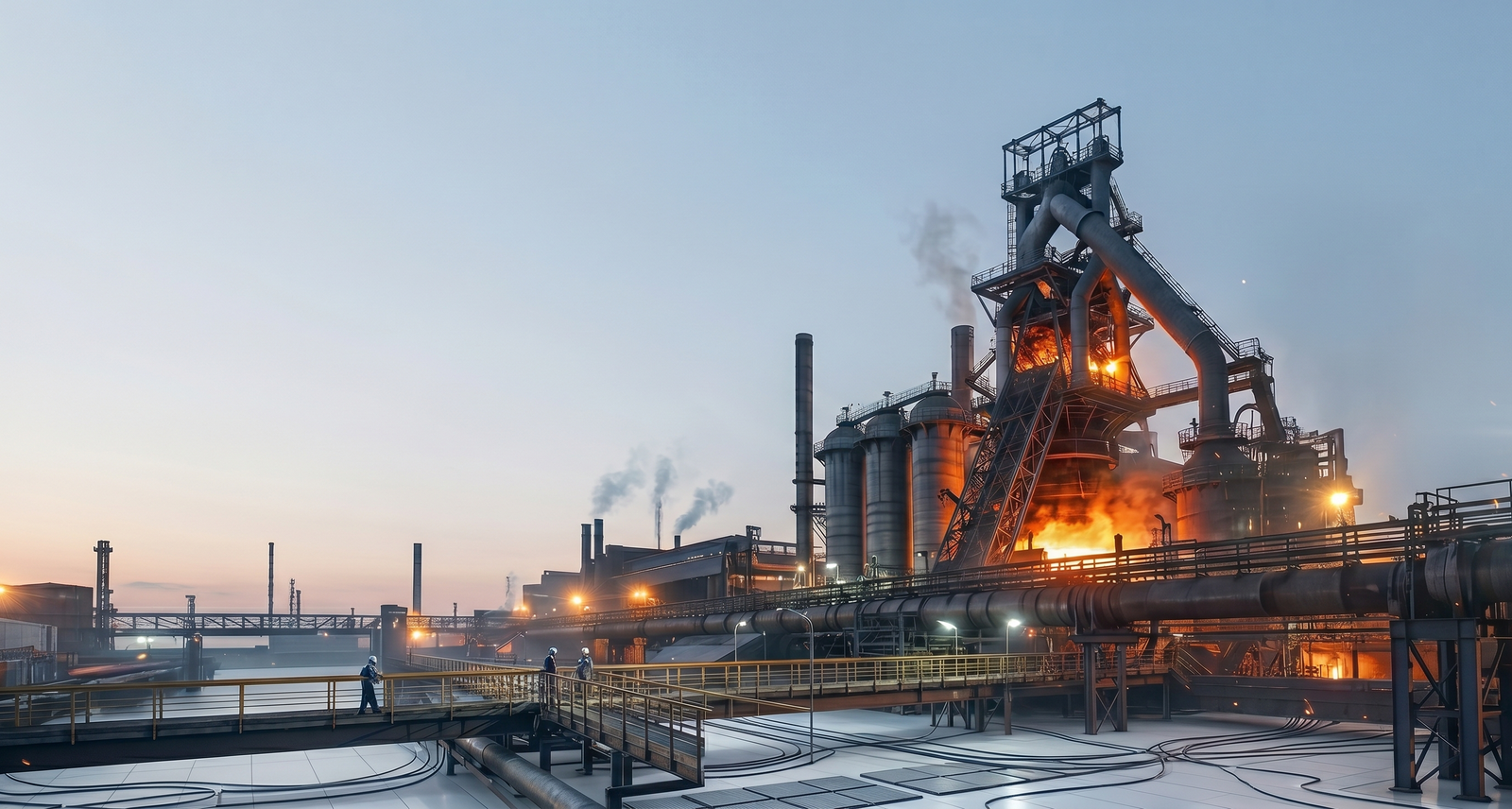
A blast furnace atmosphere, Walk into any integrated steel plant, and the conversation eventually turns to gas chemistry. Not surprising. The reducing environment determines whether you make money or bleed it on coke and refractory repairs. I've seen campaigns cut short by two years simply because operators couldn't keep the reducing zone stable. Plant managers and metallurgical engineers know this better than anyone. Get the gas wrong, and everything else falls apart. At Bionicsro, we've been fixing these problems for decades. Let me walk you through what actually happens inside that furnace and how to make it work for you, not against you.
Here's what experienced operators learn early: The internal gas environment constantly changes during operation shifts, reacts, and punishes complacency. Technically, it's a high-temperature gas blend—carbon monoxide, carbon dioxide, nitrogen, and some hydrogen. When someone asks what is blast furnace atmosphere is controlling, the short answer is reaction efficiency . That gas mixture pulls oxygen away from iron ore. If CO levels drop, reduction stalls. If CO₂ creeps up, you start reoxidizing material you already paid to process. The blast furnace atmosphere is called a reducing atmosphere because carbon monoxide removes oxygen from iron ore during metallurgical reduction. It does the real work. Everything else—charging, tapping, logistics—just supports what happens in that gas column.
Let me explain the blast furnace working principle the way I'd explain it to a new shift supervisor. You dump iron-bearing material, coke, and flux in the top. Hot air blasts through tuyeres near the bottom. Coke burns. That combustion creates CO and enormous heat—well over 2000°C right where the air hits. The heated reaction stream rises through the shaft. The burden falls. They meet somewhere in the middle. Iron oxides lose their oxygen to the CO, turning into CO₂. The reduced iron melts and drips down to the hearth. Slag floats on top. Simple in concept. Hard as hell to control in practice. The blast furnace process lives or dies on gas distribution. One channel, one hang, one slip, and you're fighting the furnace for the rest of the shift.
The blast furnace working principle depends on stable gas flow, burden movement, and controlled thermal zones.
Temperatures vary wildly depending where you measure. At the tuyeres, you're looking at 1900–2200°C. Move up to the cohesive zone where ore starts softening, you'll see 1200–1500°C. Near the top, gas might only be 200–800°C. Internal gas composition gives the clearest picture of furnace performance. Near the raceway, you get high nitrogen, plenty of CO, and trace oxygen. As gas rises, CO₂ increases because reduction is happening. Hydrogen from coal injection adds reduction power. Typical top gas runs about 20–25% CO, 15–20% CO₂, 50–55% N₂, and 2–5% H₂.
Modern steel plants use a top gas analyzer and blast furnace gas monitoring system for continuous blast furnace gas analysis. Real-time monitoring helps maintain stable thermal conditions, improves reducing gas efficiency, supports coke rate reduction, and prevents operational instability inside the furnace.
Good operators check these numbers constantly. A sudden CO drop means trouble with burden permeability. CO₂ climbing too fast suggests reoxidation.
Not every furnace runs the same way. Small ones under 500 cubic meters still show up in foundries and specialty shops. Medium furnaces between 1000 and 2000 cubic meters give you flexibility and decent output. The giants above 5000 cubic meters dominate big integrated mills in China, Japan, and Europe. You also have oxygen-enriched designs, pulverized coal injection furnaces, and experimental hydrogen units. Each type needs its own approach to atmosphere management. Bionicsro helps clients pick the right configuration based on their raw materials, fuel costs, and production targets. No one-size-fits-all solutions here.
Different types of blast furnace designs are selected based on production scale and fuel strategy.
A good blast furnace diagram shows five key sections. Throat at the top where burden enters. Stack below that, tapered and tall, where preheating and initial reduction happen. Belly connects stack to bosh. Bosh holds the tuyeres and the raceway where combustion happens. Hearth at the bottom stores molten iron and slag. Gas flows up. Heat transfers down. Reactions intensify in the thermal reserve zone. Without understanding this structure, you're guessing at pressure drops and temperature profiles. Every Bionicsro engineering engagement starts with a detailed review of your furnace's specific geometry.
Heavy industry doesn't need more vendors. It needs partners who actually understand metallurgy. Bionicsro brings technical expertise that goes way beyond selling equipment. We design industrial-grade atmosphere control systems—gas sampling probes that survive the environment, real-time monitors that don't lie. Quality standards meet ISO 9001 and API specs. When something breaks, our engineering support includes CFD modeling to figure out why and how to prevent it happening again. Custom solutions for your specific burden materials and fuel mix. Response time averages under four hours for critical inquiries. Reliable service means spare parts in stock and remote troubleshooting ready to go. And we build long-term partnerships, not transactional relationships. Your production targets become our targets.
|
Feature |
Bionicsro |
Other Competitors |
|
Technical Expertise |
Metallurgists and processors own |
Salespeople lacking technical expertise |
|
Industry Expertise |
Over 40 years of experience optimizing blast furnaces |
From 5 to 15 years, optimized components only |
|
Customization Possibilities |
CFD and thermal analysis with retrofitting |
Stock solutions only |
|
Response Time |
Answers to technical queries within 4 hours |
Response times ranging from 24 to 72 hours |
|
Reliability of Products |
Guaranteed availability of 98.5% |
No guarantees on product performance |
|
After-Sales Service |
Includes inspections, training, and remote monitoring |
Warranty services available at extra cost |
|
Optimization Services |
Long-term contracts |
None offered or subcontracted |
|
Parameters |
Normal Range |
|
Furnace Volume |
500 – 5500 m³ |
|
Operating Temperature |
200°C (top gas) – 2200°C (in raceway) |
|
Fuel |
Metallurgical Coke + PCI Coal (0 – 200 kg/thm) |
|
Reducing Gas Composition |
CO = 20 – 25%, CO₂ = 15 – 20%, N₂ = 50 – 55%, H₂ = |
Blast Furnace Efficiency Optimization
Blast furnace efficiency optimization helps improve productivity, reduce fuel consumption, and maintain stable process performance. Modern plants use PCI optimization, blast furnace gas analysis, and BF process automation to control thermal balance and gas flow inside the thermal zone. Continuous monitoring also supports coke rate reduction, improves hot metal quality control, and increases overall operational stability.
Blast Furnace Price and Industrial Cost Factors
Pricing depends heavily on what you actually need. Furnace size drives the biggest cost—a 500 cubic meter unit obviously costs far less than a 4000 cubic meter installation. Automation level matters. Advanced process control with AI-based atmosphere regulation adds maybe 15–20% to equipment costs, but pays for itself in fuel savings. Refractory quality determines campaign life. High-grade alumina or silicon carbide liners cost more upfront but save millions in downtime later. Fuel system configuration—pulverized coal injection, hot blast stove design—impacts total investment. Thermal efficiency targets influence heat exchanger specs. For an actual quote, Bionicsro needs your production goals, raw material analysis, and site conditions. No two quotes look the same.
Get the atmosphere wrong, and watch the dominoes fall. Excess CO₂ reoxidizes reduced iron. Output drops. Coke rate climbs. Insufficient reducing gas leaves high FeO in slag, which eats refractory linings and shortens campaign life. Uneven flow distribution creates channels that bypass the burden—unmelted zones, irregular hearth drainage, constant headaches. Fuel consumption can jump 15–25% under bad conditions. Productivity tanks when hanging or slipping happens every shift. Emissions increase. Maintenance costs accelerate from tuyere wear and hearth erosion. Bionicsro's monitoring and control solutions eliminate these variables. Consistent hot metal quality. Predictable operating expenses. Fewer midnight calls from the control room.
Stop guessing about what's happening inside your furnace. Reach out to Bionicsro for a straight technical conversation. Our engineers will look at your gas analysis, temperature profiles, and production data. We'll send custom quotes, process simulations, and retrofit proposals within ten working days. Whether you need a full atmosphere control system or targeted upgrades to cut fuel use, we're ready to talk. Request a consultation. Let's build a more reliable operation.
A number of process problems may occur during blast plant operation. These problems may include productivity, energy usage, and process stability.
Hanging is caused by uneven movement of the burden, which causes ineffective gas flow and reduction reactions.
Slipping is as a result of hanging and occurs when there is fast movement of the burden, causing uneven temperature and pressure.
Channeling is caused by the movement of the reducing gases in one section and not all sections of the burden of the furnace.
Scaffold formation occurs because of partial reduction of the burden and adhering to the walls of the furnace, hence reducing the space in the furnace.
Tuyere burnouts are caused by thermal stress and unstable combustion of the tuyere.
Hearth wear is caused by constant contact with molten metal and slag.
It's the gas mixture inside your furnace—mainly CO, CO?, N?, and H?—that drives iron oxide reduction. Get the ratios wrong, and production drops, coke consumption rises, and refractory linings fail early.
Higher tuyere temperatures (over 2000°C) produce more CO, which improves reduction. But if top gas temperatures climb above 250°C, you're wasting energy and likely have burden permeability problems.
Absolutely. Optimize burden distribution. Add oxygen enrichment. Adjust PCI rates. Install real-time gas analysis. Most plants see 5–12% efficiency gains without major structural changes.
Ferroalloy production, titanium slag furnaces, and high-phosphorus ironmaking all need modified gas compositions and temperature profiles to control reduction selectivity and slag properties.
Continuous monitoring is standard for modern furnaces. At minimum, top gas analysis every 15 minutes and tuyere-level sampling every shift. Any less and you're flying blind.


Connect with us for your business enquiries. Generally, we respond within a day.