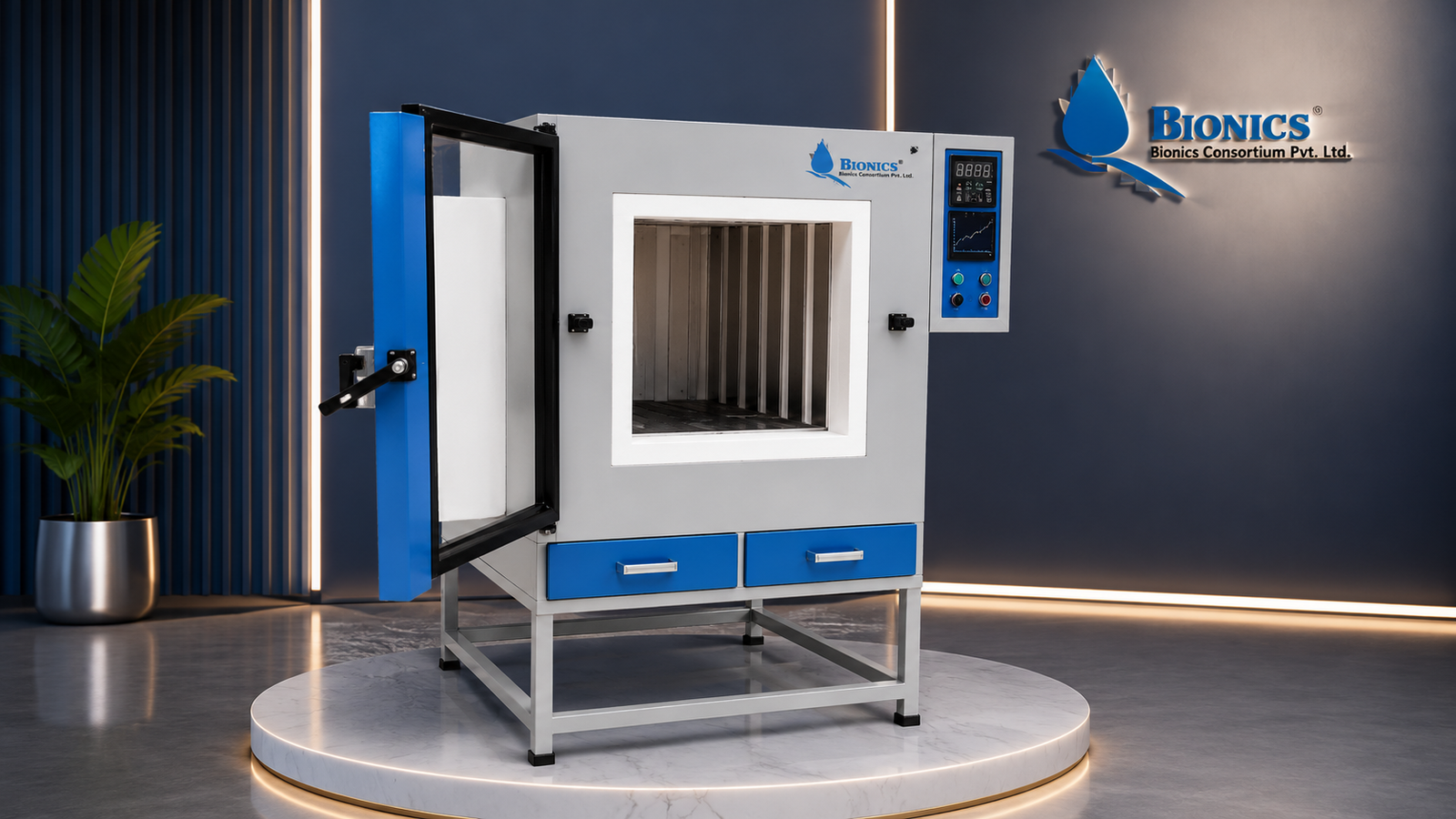
Walk into almost any heat treatment shop, metallurgy lab, or ceramics unit in India, and there's a good chance you'll find a box furnace tucked somewhere in the corner, humming away without much fanfare. It's not a glamorous machine. Nobody photographs it for a brochure cover. But ask any plant engineer who's had to troubleshoot an inconsistent hardening batch at 2 AM, and they'll tell you this "simple steel box" is doing more engineering work than it lets on. If you're sourcing one for a new line, or replacing a unit that's finally given up after a decade of service, it helps to actually understand what's happening inside it — not just compare spec sheets and price quotes.
At its simplest, a box furnace is a chamber-type heating equipment used to raise materials to controlled temperatures for processes like annealing, hardening, sintering, and calcination. The name is literal — it's a rectangular, box-shaped chamber where you load your parts or samples, heat them uniformly, then cool them, either inside the chamber or once removed. Where it differs from a tube furnace (built more for continuous, linear processing) is that a box furnace handles batches. You load a fixed quantity, run the cycle, unload. Simple concept, but getting the execution right — even heating, tight tolerances, repeatability — is where the real engineering lives. Depending on who you ask, it might get called an industrial box furnace or a laboratory box furnace. Same basic machine, different scale.
The working principle isn't complicated. Electrical resistance heating elements — kanthal wire for lower ranges, silicon carbide rods or molybdenum disilicide elements when you're pushing higher temperatures — convert electricity into heat. That heat radiates and convects through the insulated chamber until it reaches your set point. A PID controller handles the ramp rate, the soak time, and often the cooling schedule too, while thermocouples keep feeding temperature data back so the system can correct itself in real time. Good units hold tolerance within a degree or two Celsius, which matters enormously once you're dealing with heat-sensitive alloys or research-grade samples.
There's one thing people underestimate: insulation. A furnace with poor insulation — ceramic fiber or firebrick, typically — bleeds heat, forces the elements to work harder, and drives up your power bill over a long soak. An electric box furnace built with decent insulation isn't just more efficient; it's more stable, too.
Not all box furnaces are built for the same job, and this is where a lot of first-time buyers get tripped up.
Strip a box furnace down and you'll find a heating chamber lined with refractory insulation, resistance heating elements, a digital or programmable controller, thermocouples doing the sensing, a solid outer steel casing, and a door built to seal tightly under repeated thermal cycling. Some models add forced air convection for faster cooling; most decent ones include over-temperature cutoffs as a safety measure. None of this sounds exciting on paper, but the quality of these individual parts is really what separates a furnace that lasts fifteen years from one that starts drifting off-spec after eighteen months.
The range of box furnace applications genuinely surprises people outside the industry. Metallurgical plants use them for annealing, hardening, tempering, normalizing — the bread and butter of heat treatment. Ceramic and glass manufacturers lean on them for sintering and firing work. Universities and research labs run laboratory box furnaces for material characterization, ash content testing, thermal analysis. Pharma and chemical companies use them for calcination and loss-on-ignition testing. Even electronics manufacturers use smaller units for component curing. It's this spread across sectors that keeps demand for a dependable box furnace manufacturer fairly steady, year after year, across the country.
Control is the big one. You simply cannot match the repeatability of an electric box furnace with open-flame or fuel-fired alternatives — the temperature profile stays consistent batch after batch, which matters a great deal once your process is validated and you can't afford drift. They're also cleaner. No combustion byproducts to manage or vent, which is a real consideration in a lab environment. Add to that: relatively compact footprint, easier maintenance compared to continuous furnaces, and the flexibility batch processing gives you — small test runs one day, full production loads the next, no redesign required. Insulation technology has come a long way too, so the older complaint about high running costs doesn't hold up quite as much anymore.
Forget brand names for a second and start with the actual questions.
What's your required maximum operating temperature — does your process even need a high temperature box furnace, or is general purpose enough?
What chamber size matches your real batch volume (oversized chambers waste energy heating empty space, undersized ones bottleneck your throughput)?
Do you need an inert or vacuum atmosphere, or is standard air fine?
And how sophisticated does the controller need to be — a basic on/off unit works for simple drying, but anything involving specific ramp-and-soak heat treatment profiles needs a proper multi-segment programmable controller. Get these four right and you've solved most of the decisions.
Box furnace price in India moves with a handful of variables: chamber size, maximum temperature rating, insulation quality, controller sophistication, and the heating element material used. A basic laboratory box furnace rated to 1200°C costs meaningfully less than a high temperature box furnace pushed to 1600°C and beyond, since the latter needs premium elements and much thicker insulation to hold that range safely. Automation adds cost too — programmable multi-step controllers with data logging aren't cheap compared to manual dial controllers. One thing buyers often skip over: after-sales support, warranty coverage, and spare parts availability. These end up mattering more for total cost of ownership than the sticker price ever does.
We build box furnaces at Bionics RO with Indian shop-floor realities in mind — voltage fluctuations, dusty environments, long duty cycles that don't let up. Our team works directly with heat treatment plants, research labs, and manufacturing units to spec furnaces around what the process actually needs, not what sits neatly in a catalog. Every unit gets tested for temperature uniformity before it ever leaves our facility, and we back that up with real installation support and after-sales service that responds when it counts — because a furnace going down mid-production is never a minor inconvenience.
A box furnace looks unremarkable from the outside — just a steel box with a door. But the engineering that keeps its heating consistent, repeatable, and safe over years of operation is anything but simple. Get the specification right — temperature range, chamber size, controller type, atmosphere requirements — and you save yourself both money and a lot of operational headaches later. Whether you're setting up a new heat treatment line or finally retiring an old lab furnace, understanding these basics puts you in a much better position when you sit down with suppliers.
Get in Touch
If you're evaluating a box furnace for your plant, lab, or research facility, reach out to the Bionics RO engineering team. We can walk through your process requirements and help you land on a configuration — and a quote — that actually fits what you need.
The maximum temperature of electric box furnaces is often about 1200°C. Maximum temperature of high temperature box furnace models depends on the element used and can be up to 1800°C.
In a muffle furnace the sample is protected from direct heating element exposure by a separate inner chamber. In a conventional box furnace the elements can be in the same chamber with the load.
A good industrial box furnace, if well maintained and well loaded, can run reliably for 10 to 15 years or more.
Yes, there are many sizes of box furnaces. Small box furnace units for lab and research work, and large box furnace models for industrial production scale heat treatment.
The principal cost drivers are, roughly in order of impact, thermometer rating, chamber volume, controller sophistication and insulation quality.
Ok. Most times. Most box furnaces and high temperature models with large capacity require a three phase power supply. It is recommended checking your electrical supply before installation.


Connect with us for your business enquiries. Generally, we respond within a day.